

Getting into the stock market can be a daunting experience. Emotions run high, you are bombarded with often conflicting advice and information, and many investors find themselves quickly overwhelmed. “Cut your losers early and let your winners ride” is one of the most common mantras in investing. But how early is early, and how high should you let them go? And more importantly, why is this an essential rule to follow over the long run?
In this post, we will examine the psychological reasoning behind this piece of advice, the historical tendencies of top investors, and how to practically implement this strategy in your portfolio.
Let’s first cover the simple concept….
Trimming your losers early on means selling underperforming stocks or those showing potential red flags on fundamental grounds before they irreparably damage your portfolio.
Rolling with your winners means staying invested in your top-performing picks, and even buying more when given the opportunity, instead of prematurely taking profits.
The reason this advice is so powerful is that it forces discipline, objectivity, and getting emotional noise out of your decision-making process. The market has a way of rewarding the strong over the long-term, and many of history’s greatest investors have been able to amass fortunes by adhering to this seemingly simple rule.
Why It Is Hard To Sell A Bad Stock
Before we get into how and when to implement this guideline, we should discuss why investors often struggle to let bad stocks go.
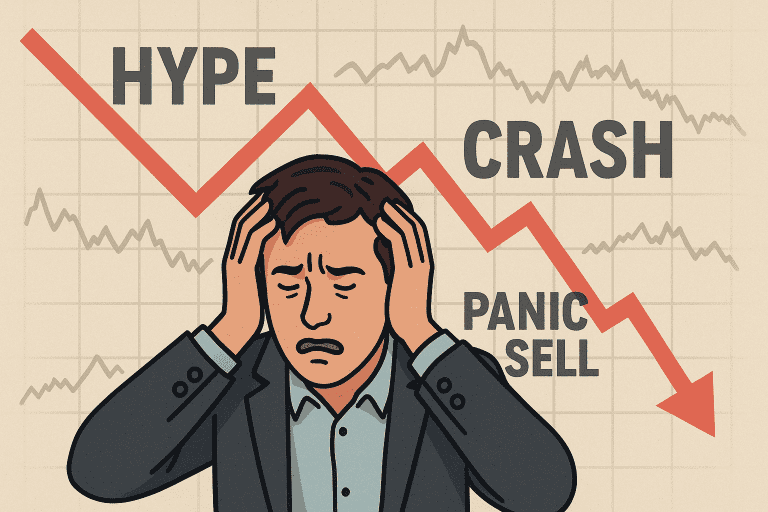
Behavioral finance has identified a psychological quirk called loss aversion that describes how we feel losses far more intensely than gains. For example, if you lose $1,000, you would need to make $2,000 just to get back to a neutral emotional state. That is why many people hold on to a stock that is losing value, out of hope that it will turn around, rather than admit defeat and move on.
Confirmation bias can also cause investors to search for information that affirms their hopes the stock will recover while downplaying or ignoring signs the company is in trouble.
Sunk cost fallacy also causes us to irrationally think we should hold a stock because we have invested too much to sell. Markets do not care about what you paid for a stock. They only care about current and future fundamentals.
When to Sell a Losing Stock: 6 Warning Signs
If you are holding a stock in your portfolio and wondering whether it is a good candidate for the sell button, here are six key signs to look out for:
The Company’s Fundamentals Are Turning Negative
It is okay if the company you bought misses on earnings one quarter. It happens to even the best stocks from time to time. But if a company’s fundamentals are on a negative trend—think: declining revenue, deteriorating margins, rising debt, regulatory or management troubles—it could be the start of a permanent downward trajectory. Track not just one quarter, but an entire earnings history.
The Business Model Itself Is Going Out of Style
It is the nature of markets to change, and an industry leader one day can become irrelevant the next. When the core product of a company no longer has demand, there is rarely a successful pivot. Do not be a Blockbuster, Kodak, or BlackBerry.
The Market Is Shifting Away from This Business
A company can be a great business in a high-growth industry but fall from grace as the macroeconomic environment changes. A company that rode low-interest rates and cheap money may suddenly find itself unprofitable as rates rise.
The Stock Is Underperforming Its Peers
If the stock is continually trailing the market index or its closest competitors, it may be worth paying attention to. It can be a sign of lagging innovation, lost opportunities, or worsening fundamentals.
Management Continues to Make Mistakes
Bad management is a leading cause of underperformance. If the management team or board continues to make capital allocation blunders, overpromise and underdeliver, or lacks any kind of strategic vision for the company, it is often better to walk away.
You Bought the Stock Based on Excitement, Not Research
Admit it; we have all been there. Whether buying in based on Reddit hype, a hot stock tip from a friend, or even just greed and overconfidence, a bad decision is still a bad decision. And that is okay; the great thing about the stock market is that nobody knows anything for sure, and no investor is perfect. When your original investment thesis for a stock was thin or hopelessly speculative, do not be afraid to change course and admit you were wrong.
Roll With The Winners: Why You Should Not Sell a Good Stock Too Early
Of course, the other side of the equation is also true; once you find a stock that you believe in, you need to have the discipline to stick with it.
Investors who only capture small gains before jumping ship miss out on far greater rewards later. Everyone has heard the term “cutting your flowers while watering your weeds”, and for good reason. It is one of the most common investing mistakes.
Great Stocks Tend to Keep Getting Better
Momentum is a thing in the stock market. Successful businesses, given time, can often continue to compound their earnings. Consider Apple, Amazon, or NVIDIA over the past decade. People who invested in each of these and simply held through market cycles were rewarded with enormous multiples over time.
Compound Gains Accelerate Over Time
Mathematically speaking, compounding your gains becomes ever more powerful the longer you let it work. 100% is a great return, but to turn a stock 3x or 10x or more will take years. You will not get there by bailing at the first sign of trouble.
Do Not Buy a Stock Simply Because It Is Going Up
At the same time, if you simply hold a stock just because it is going up without doing your homework, it is not guaranteed to go higher. Instead, revisit the fundamentals. If a company is still delivering on the metrics you bought it for, earnings, revenue, growth, then chances are there is still more upside to be had.
Case Study: Apple vs General Electric
A quick examination of two very different, but well-known companies can illustrate the point.
If you had purchased Apple stock in the early 2000s and simply held through iPhone debuts, stock splits, and periodic dips, your capital would have grown by many thousands of percent over the past two decades. Each year, Apple continued to find new ways to delight consumers, build an unrivaled ecosystem, and reward shareholders.
GE on the other hand, was once a blue-chip staple, but ended up losing years in executive turmoil, debt problems, and failed turnarounds. Investors who held on and waited for a return to former glory were left disappointed as the capital they invested slowly eroded.
This case is not meant to pick on GE, but to make the point that it is crucial as an investor to stay invested in those companies that are strong and trimming those that are not.
What They Say
Peter Lynch:
“The best thing to do with a stock that is going down is to cut it, but selling your winners and holding your losers is like cutting the flowers and watering the weeds.”
Warren Buffett:
Buffett is known for buying into great businesses with long-term moats and exceptional management and sticking with them for the long term. Buffett hardly ever sells his winners, because he views stocks as fractional ownership of companies, not financial instruments.
Jesse Livermore:
Livermore, an early trading pioneer was one of the first to warn that the best profits come from not selling your winners and instead letting them ride.
Tools and Strategies to Help You Follow This Rule
Knowing the rule is one thing; following it is another. Here are a few tools and strategies that might help you do just that:
Strategic Use of Stop Losses
Stop losses can be a useful tool for setting automatic exit points for a stock once it dips below a certain threshold. They should be set relative to your broader investment strategy, however, and not used blindly to prevent catastrophic losses.
Revisiting Your Portfolio Every Quarter
Earnings season can be a good time to do a quick review of your portfolio. Go through each stock and honestly ask yourself, would I buy this company again? If not, sell it.
Keeping a Written Record of Your Investment Thesis
Note down the reasons you buy a stock before purchasing it, and if those no longer hold true, it can make it easier to trim the position. A portfolio journal is an excellent habit.
Keeping Your Portfolio Ripe of Weeds
If a stock is performing poorly and weighs down your overall portfolio, consider pruning it, instead of just letting it linger. If a stock is holding back the best ideas in your portfolio, it is not doing much good.
Cases When You Might Sell a Winning Stock
The following are some exceptions when taking profits on a winning stock makes sense:
- Company’s growth has stalled
- Valuation has reached unsustainable levels
- Better investment opportunities elsewhere
- Portfolio needs rebalancing to hedge risk
- Long-term thesis of the company has changed.
Otherwise, let it roll.
Summary Checklist
To summarize, here is a quick checklist of steps you can take to apply this adage effectively in your investment decisions:
- Do regular portfolio reviews
- Spot the underperforming stocks with negative fundamentals
- Sell stocks that do not align with your long-term thesis
- Reinvest the freed capital in the best-performing ideas
- Hold your winners as long as the underlying business is sound
- Be honest with yourself and avoid emotional decision-making
Final Thoughts
The philosophy of selling bad stocks early and riding your winners is one of the simplest in theory, yet hardest in practice. This is because it requires doing the opposite of our natural human emotions. The good news is that by following this rule consistently, you can significantly improve your investment returns over the long-term.
Success in the stock market is not about being 100% right every time. It is about making more good decisions than bad, and through experience, learning how to position yourself to profit from market cycles and swings. Selling losers and holding the best ideas is one of the best habits an investor can cultivate.
Keep learning: courses on this topic
Self-paced courses to put this article into practice.
 Udemy
Investing For Beginners: How To Invest With Confidence
This Course is for you if ...1. You know nothing about investing.2. You are new to stock market investing and looking for a place to…
View course
 Udemy
From Welfare to Wealth: Earn Online & Invest Wisely
If you're living on a low income, receiving benefits, or stuck in survival mode — this course is for you.“Financial Independence on a Low…
View course
 Udemy
How To Invest In Stocks: Value Investing Course
A self-paced video course on value investing and stock investing, with practical lessons you can apply right away.
View course



Leave a Comment