How accurate is Peter Schiff's track record? A sourced scorecard of what he got right (2008 housing), what he got wrong or early (dollar crash, hyperinflation, $5k gold timing), his bitcoin skepticism, and lessons for US investors who follow perma-bear forecasts.

“Best sectors” is not a guarantee — it is a watchlist of industries with durable demand, workable valuations, and a role beside a diversified core. Here is a practical 2026 US sector watchlist, how to get exposure, and when not to chase a hot theme.
How accurate is Tom Lee? A sourced scorecard of Fundstrat S&P 500 year-end targets vs actual closes: tight hits in 2020, 2021, 2023, and 2024, the 2022 miss, open 2026 targets as of September 2026, and lessons for US investors.
Should your next retirement dollar go to a 401(k) or an IRA? Most workers should grab the full employer match first, then fund an IRA, then return to the 401(k) toward the 2026 $24,500 limit — adjusting for fees, income phaseouts, and debt.
FIRE (Financial Independence, Retire Early) is about building a portfolio that can cover your spending so work becomes optional. Here’s how the math works, the main FIRE types, how savings rate drives your timeline, practical 2026 US steps, and why healthcare planning matters more this year.
Selling stocks, funds, or other investments in 2026? Here are the IRS long-term capital gains brackets (0%, 15%, 20%), how short-term gains are taxed, when the 3.8% NIIT can stack on top, and simple taxable-income examples — plus federal vs state caveats.
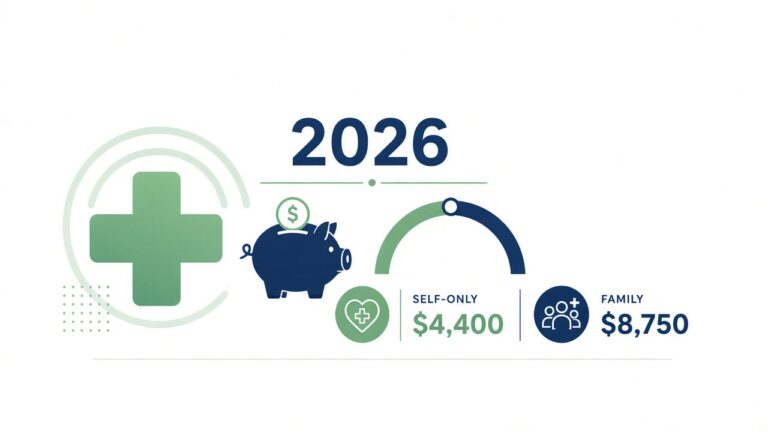
Planning your 2026 HSA contributions? Here are the IRS limits for self-only and family coverage, the age 55+ catch-up, HDHP eligibility thresholds, and simple paycheck math — plus how an HSA stacks with your 401(k) and IRA.
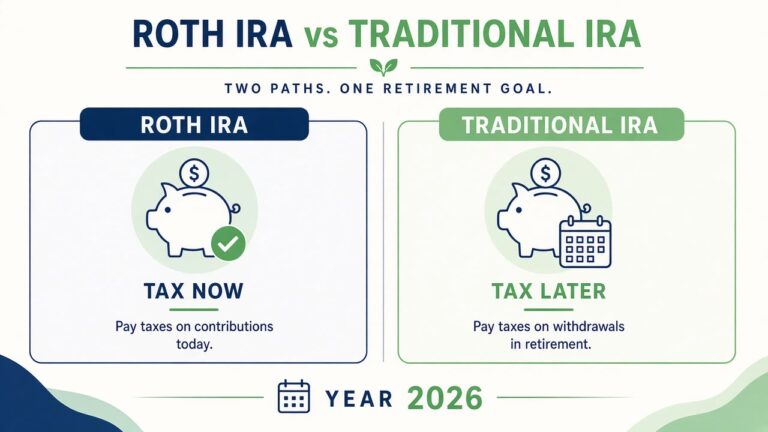
Trying to choose between a Roth IRA and a Traditional IRA in 2026? Here’s how the tax treatment, income limits, RMDs, and contribution rules differ — and a practical way to decide.