
AI-driven infrastructure is creating a new breed of winning stocks. Nvidia, Microsoft, and the mega-cap hyperscalers get most of the attention from retail investors. But there’s a silent revolution unfolding in the neocloud sector that you should be watching. Nebius Group (NASDAQ: NBIS) is leading the charge.
You might be wondering if Nebius is still a good stock to buy now that it’s had its big move. Short answer: yes. Here’s the long version of why NBIS is still a strong buy today. And there’s an important macro signal you’re probably going to miss.
- What Is a Neocloud — And Why Does It Matter?
- The Google–SpaceX Deal: The Most Bullish Signal for Nebius You Probably Missed
- Nebius Group: From Yandex Spin-Off to AI Infrastructure Powerhouse
- The Numbers Don’t Lie: Nebius’s Growth Is Extraordinary
- Why Nebius Is Still Early — The Full Bull Case
- Nebius Is Still Growing Off of a Relatively Small Base
- Nebius Has a Cleaner Balance Sheet Than Its Biggest Competitors
- Nebius Is Building a Full-Stack Business While CoreWeave Is Renting GPUs
- Google is Directly Pointing at Nebius With Its $800 Million+/Month Checks to SpaceX
- MLPerf Validation, A Reference Architecture, AND Rapidly Scaling Energy Strategy
- Nebius vs. CoreWeave: Why the Edge Goes to Nebius
- NBIS Price Prediction: What Wall Street and the Data Are Saying
- The Key Catalysts to Watch
- The Risks You Should Understand
- The Bottom Line: Nebius Is a Generational Opportunity That Hasn’t Closed Yet
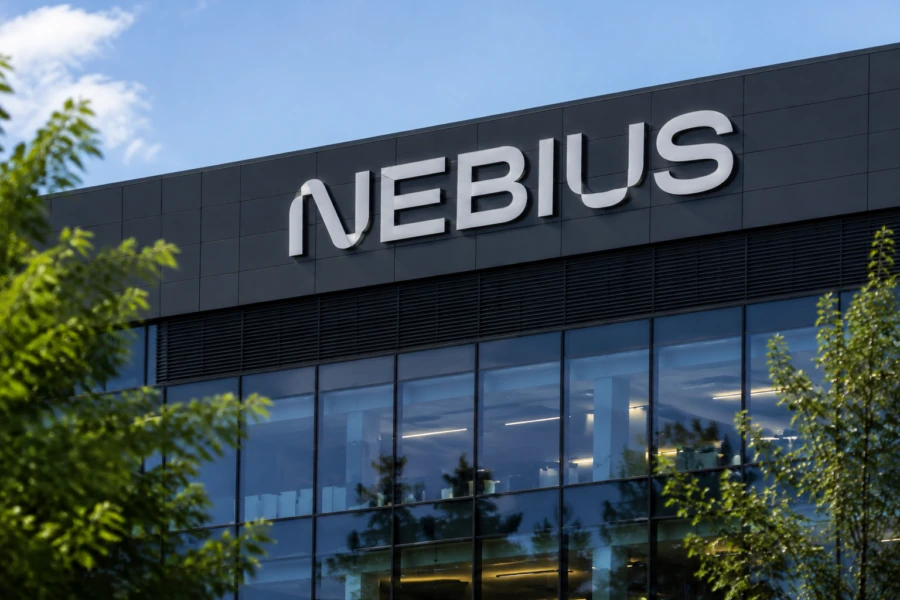
What Is a Neocloud — And Why Does It Matter?
Let’s back up for a second. Before we get into Nebius specifically, what is a neocloud? Unlike AWS, Google Cloud, or Microsoft Azure (i.e. hyperscalers), neoclouds are built from the ground up specifically to provide AI infrastructure.
Neoclouds won’t try to provide you every cloud service. They specialise in providing raw GPU compute, high-performance storage, and AI- native tooling for businesses that are training large language models, doing inference workloads, and developing the next generation of AI products.
The difference here is structural. Hyperscalers try to be everything to everyone. Neoclouds laser-focus on AI. And in a battle of AI brute force, specialists come out on top.
The global GPU- as- a-Service (GPUaaS) market is expected to grow 23% annually while the broader AI infrastructure market is expected to grow from $33 billion in 2023 to north of $260 billion by 2030. This compute bull market is not a bubble. It’s the defining CapEx cycle of our lifetimes.
The Google–SpaceX Deal: The Most Bullish Signal for Nebius You Probably Missed
Consider this massive macro catalyst for neocloud investors that has nothing whatsoever to do with Nebius:
In June 2026, Google announced that it will pay SpaceX $920 million per month — nearly $1 billion USD per month — for access to roughly 110,000 NVIDIA GPUs and associated infrastructure. This deal is slated to last from October 20 26 until June 20 29. Amortized over the life of the contract at full run rate, this is a $30 billion arrangement.
Pause for a second. Google, one of the largest single owners of AI compute on the planet with its own TPU ASICs, its own global network of data centres, with a CAPEX budget this year of between $180-$190 billion USD… still couldn’t scale its infrastructure fast enough to keep up with demand for its Gemini Enterprise platform. A Google Cloud spokesperson called the SpaceX deal “a short-term bridge to meet surging customer demand…” for Gemini “… which has been even higher than we expected.”
Translation: the largest and most resourceful hyperscaler on Earth is renting GPUs from a 3rd party vendor at a premium because demand is exploding.
SpaceX isn’t the only company reacting this way. In a separate deal, AI company Anthropic agreed to pay SpaceX $1.25 billion per month through 2029. Between these two compute service agreements alone, SpaceX is set to generate roughly $26 billion in revenue per year from just those two counterparties. Oh, and SpaceX’s parent company Alphabet is raising $84.75 billion USD in equity capital at the same time, a new all-time record for the company. And this cash is earmarked specifically for AI infrastructure buildout.
What does this all mean for Nebius? EVERYTHING.
Need more urgency behind surging corporate demand for external AI compute capacity? Look no further than Google paying up north of $1 billion/month to SpaceX. If not one, but TWO of the largest tech companies in the world can’t build compute infrastructure fast enough to meet demand, that should tell you all you need to know about how hot this market is.
The space that Nebius is commercializing at scale — dense, GPU-rich, AI-optimized cloud capacity — is so valuable that Google is willing to pay SpaceX ABOVE COST just to rent it. Every cloudaaS and neocloud company that can actually deliver at scale is going to benefit from this for years to come.
Nebius, which still sees itself in hyper-growth mode, has 220 megawatts of data centre capacity under construction and plans to spend between $16-$20 billion on capex in 2026. Never before in history has there been a more favourable demand environment for this company’s business model.
Nebius Group: From Yandex Spin-Off to AI Infrastructure Powerhouse
To appreciate how special Nebius is, you have to start with its origin story. Nebius Group was spun out of Yandex — which has been dubbed “Russia’s Google” — after international sanctions were put in place because of Russia’s war in Ukraine. The spinout itself could have spelled doom.
What happened next is one of the most remarkable corporate pivots you’ll see in tech lately. Nebius went back to Nasdaq, moved its headquarters to Amsterdam, and built out a world-class engineering team with hyperscale infrastructure experience. Led by CEO Arkady Volozh, Nebius rebranded itself as a full-stack AI cloud company with a twofold mission: serve enterprise customers and AI-native startups all over the world.
That gamble is now starting to pay off big.
The Numbers Don’t Lie: Nebius’s Growth Is Extraordinary
Let’s talk hard data, because the financial trajectory here is unlike almost anything else in public markets today.
- Q4 2025 revenue: $227.7 million — a 547% year-over-year increase
- Q1 2026 revenue: $399 million — a 684% year-over-year increase (core AI cloud revenue alone surged 841% YoY to $389.7 million)
- Full-year 2025 ARR: $1.25 billion, a 14x increase from end of 2024
- 2026 revenue guidance: $3 billion to $3.4 billion
- 2026 ARR target: $7 billion to $9 billion
- Cash and equivalents: approximately $4.9 billion on the balance sheet
- Investment portfolio implied value: $7.5 to $8 billion
Don’t mistake those numbers as pie-in-the-sky figures. Nebius has secured them with signed contracts, committed CAPEX, and blue-chip customers coming down the pipeline — including a multibillion dollar enterprise deal with Microsoft, Cloudflare, Shopify, and Prosus on the business front, as well as AI-first upstarts like HeyGen, Lightning.AI, and Photoroom.
CEO Jensen Huang of Nvidia himself has gone on the record calling Nebius one of the leading AI cloud platforms in the world.
Leopold Aschenbrenner, a former OpenAI researcher turned Situational Awareness managing partner just picked up 5.6% of Nebius — over 12.4 million shares, worth north of $3 billion. These aren’t commentators betting against their own words. These are experts who understand where AI infrastructure demand is going.
Why Nebius Is Still Early — The Full Bull Case
Even after a rally that’s pushed NBIS roughly 176% year-to-date in 2026 from its March lows (but still down from a peak near $278 to $222 as of writing), there’s still plenty of bull case left to play out for Nebius.
Nebius Is Still Growing Off of a Relatively Small Base
$399 million in quarterly revenue sounds big—and it is—but keep in mind that CoreWeave reported over $5 billion in revenue for the full year 2025. Nebius is coming from a smaller base, so its growth potential and runway remain massive. At guidance of $3-$3.4 billion in revenue for 2026, Nebius is still implying 523% annual growth. Businesses in this stage of development with this growth trajectory and level of enterprise validation almost never end up being “too late.”
Nebius Has a Cleaner Balance Sheet Than Its Biggest Competitors
Something that many investors have missed in Nebius’ story is that the company was financed in a very different manner than CoreWeave. Yes, CoreWeave just secured an $8.5 billion term loan due in March of 2028, but that also received a lot of flak on here for adding leverage onto a company that was already burning through cash. Nebius is playing a different game entirely with close to $5 billion in cash on hand and a stake in data centers worth between $7.5 and $8 billion. Nebius will have the financial flexibility to pivot, grow faster, and ride out market storms without the existential threat of financing hanging over its head. Additionally, Nebius owns a major stake in ClickHouse, an open-source analytics database startup, which could also be worth billions by itself.
Nebius Is Building a Full-Stack Business While CoreWeave Is Renting GPUs
CoreWeave has impressive scale with over $5 billion in annual revenue, but over 98% of it comes from multi-year “use-or-pay” contracts to rent GPUs to customers. Nebius, on the other hand, has been methodically building out a full-stack AI cloud platform: everything from compute and storage to developer tooling, managed services, and enterprise support are being built under one roof. This not only improves customer retention and stickiness by increasing switching costs, it allows Nebius to capture more total value from each customer. Nebius has “differentiated option value with greater spot market flexibility, a diversified go-to-market strategy focused on the enterprise and a more flexible capital structure,” Morgan Stanley.
Google is Directly Pointing at Nebius With Its $800 Million+/Month Checks to SpaceX
The biggest demand signal in cloud computing right now came out of Google last week. Google is paying close to $1 billion per month to rent compute capacity from SpaceX that it needs to keep the lights on because it couldn’t build capacity fast enough internally. Now obviously Nebius isn’t SpaceX, but Nebius is building exactly the kind of capacity Google is trying to rent. Nebius is projected to have 220 megawatts of capacity online by the end of this year and is forecasting between $16-$20 billion of CapEx spend in 2026. Nebius will be ramping into a major increase in GPU demand from the outside precisely as nebulae companies like it are beginning to generate outsized capacity to serve this demand.
MLPerf Validation, A Reference Architecture, AND Rapidly Scaling Energy Strategy
Nebius hit faster cluster run-time speeds than all of its cloud competitors, as validated by MLPerf through an MLPerf Training v5.0 submission. Nebius didn’t just talk about a reference architecture for its business, it built and validated one. Separately, Nebius is partnering with Bloom Energy in a $2.6 billion deal to power its data centers with fuel-cell energy.
Nebius vs. CoreWeave: Why the Edge Goes to Nebius
Perhaps no AI investing debate has become more contentious than Nebius vs. CoreWeave. Both are strong theses. But for deep-value, long-term investors, I believe Nebius checks more boxes:
Price-to-book ratio: Nebius trades at a significant discount (6.28x to CoreWeave’s 10.15x)
Revenue growth: Nebius has consistently grown revenue at a faster rate
Balance sheet: Nebius has far less reliance on structured debt and is otherwise cleaner
Analyst target implies: ~30% upside for Nebius, vs. ~20% for CoreWeave
Total addressable market per customer: Nebius is building a full-stack platform to capture a greater slice of the AI value chain (not just renting GPUs like CoreWeave)
Counterpoint: CoreWeave sports a massive backlog that Nebius cannot come close to matching today. However, if Nebius executes on its growth plan, it should begin to rapidly close that gap. If you’re willing to take on near-term execution risk for a chance at outsized reward, Nebius is your pick.
NBIS Price Prediction: What Wall Street and the Data Are Saying
OK, seriously…what’s next for NBIS?
Currently trading around $222 in early June 2026, down slightly from an all-time high near $278. NBIS stock is up ~176% year-to-date. Let’s take a look at what analysts and the charts are telling us about what’s next for the stock.
From the Analysts
16 analysts tracked by S&P Global have issued ratings on NBIS with a consensus “Buy” rating and a 12-month average price target of $238.86. The spread between high and low targets is quite large with a low estimate of $120 and a high target of $380.
Recent updates include:
- Citigroup increased its price target on NBIS to $287 from $169 following the first quarter’s earnings beat, representing a 70% increase in their price target
- Citizens upgraded its target price to $270 from $175
- Northland increased its target price to $248 from $215
- Canor Fitzgerald initiated coverage with an Overweight rating
- DA Davidson downgraded NBIS to Neutral in May 20 due to a belief that stock will face difficult execution as larger GPU clusters come online
Analyst dispersion captures the fundamental divergence of opinion: bulls are basing their optimism on rocketing revenue growth and the macro compute tailwind; bears are concerned with the squeeze in valuation and execution risk at scale.
Base Case (12- Month): $270–$300
Given Nebius delivers on its 2026 revenue forecast of $3 to $3.4 billion, continues to add large enterprise accounts at its current rate, and turns on its expected data centre capacity, we think re-rating to $270 to $300 is reasonable base case. This is predicated on continued AI infrastructure investments from hyperscalers (Google–SpaceX deal and Alphabet’s $85 billion equity raise certainly lays a foundation for this), steady GPU supply from Nvidia, and no further degradation to the macro environment.
Bull Case (12–18 Month): $350–$380
In a bull case scenario where Nebius achieves the high-end of its $7 to $9 billion ARR guide, announces more $500+ million contracts like Microsoft, and experiences additional institutionals bulding positions, we could see the stock move toward $350 to $380 called out by the bullsiest analyst targets. Nvidia’s direct investment into the company coupled with Jensen Huang’s vocal support of Nebius lends significant strategic credibility that we could see sway sovereign wealth funds and big institutionals that are underweight neocloud.
Bear Case: $130–$150
The only way we see shares moving downward is through execution disappointment. If Nebius misses its cluster deployment timelines, if a large customer cuts spending, or if demand for AI infrastructure ebbs as part of a larger tech selloff, we could see shares retrace back to $130 to $150. While this is still above its 52-week low of $43.89 by a substantial margin, it would be a very painful downside scenario for investors who purchased shares near all-time highs.
The Key Catalysts to Watch
- Q2 2026 earnings — the next major checkpoint on whether the $3 billion+ revenue run rate is on track
- Additional large-scale contract announcements — particularly any deals resembling the Microsoft partnership
- Data centre capacity milestones — hitting 220 MW connected by year-end is a critical execution proof point
- ARR progression — monthly ARR data will be the clearest leading indicator of whether the $7 to $9 billion 2026 target is achievable
- Nvidia supply allocation — any signals of preferential GPU access for Nebius from Nvidia would be a significant re-rating catalyst
The Risks You Should Understand
No credible investment thesis discounts risk. Here are the risks for Nebius as I see them.
Scale execution risk.
Nebius is now entering its toughest growth stage. Growth targets hinge on Nebius successfully spinning up orders of magnitude larger GPU data centre clusters than it has previously. Its engineering brilliance must be duplicated at scale.
Premium valuation
NBIS trades at a lofty price-to-sales multiple. The market is pricing in substantial future growth. If growth falters, we could see rapid contraction in that multiple.
Insider selling
Reports surfaced in early June 2026 that several of Nebius’ top executives quietly sold out large portions of their stake in the company. This is a red flag worth watching, though less so in a company that has tripled over the past year.
Competitive threats
AWS, Google, and Microsoft are investing heavily in bespoke AI chips. These initiatives have the potential to chip away at neocloud’s pricing power in the long run.
Profitability
Nebius reported a $173 million adjusted net loss for Q4 2025. The company is investing heavily towards growth and investors need to be ok with that.
The Bottom Line: Nebius Is a Generational Opportunity That Hasn’t Closed Yet
The window of low risk/reward in neocloud investing will not stay open forever. As the players mature, become profitable, and are discovered by the rest of the market the CAR will come down.
Nebius has plenty of room to grow into its story.
The Google-SPACEX compute deal – $920 mil per month, from the most cash generative company of all time, JUST TO COVER A DEMAND SHORTFALL – is the single most important macro datapoint for neocloud investors in 2026. It signals that external AI compute capacity is not a luxury. It is mission critical. And Nebius is developing that capacity from the ground up with a best-in-class full-stack platform, a pristine balance sheet, Nvidia’s stamp of approval, and now some of the best tech money has to offer backing it up.
Long-term investors who are truly convinced of the AI infrastructure buildout – not a fad, but the foundational capital cycle of the next decade – will view Nebius Group as the highest quality, highest upside neocloud stock in public markets.
The stock has already rallied exponentially. But if Nebius continues to execute, we may only be seeing the beginning of its move.
This article is for informational and educational purposes only and does not constitute financial advice. Always conduct your own due diligence and consider your personal risk tolerance before making any investment decision.
Keep learning: courses on this topic
Self-paced courses to put this article into practice.
 Udemy
From Welfare to Wealth: Earn Online & Invest Wisely
If you're living on a low income, receiving benefits, or stuck in survival mode — this course is for you.“Financial Independence on a Low…
View course
 Udemy
How To Invest In Stocks In 15 Minutes?
This is for anyone who wants a quick lesson on stocks and want to start trading stocks today—Within 15 minutes. This beginner guide will…
View course
 Udemy
Value Investing: How to Invest Wisely Like Warren Buffett
Finally, You'll Become a Wiser Unstoppable Investor and Start Kicking Off Your Investment Journey In Just 2 Hours. Results That Speak for…
View course




Leave a Comment