

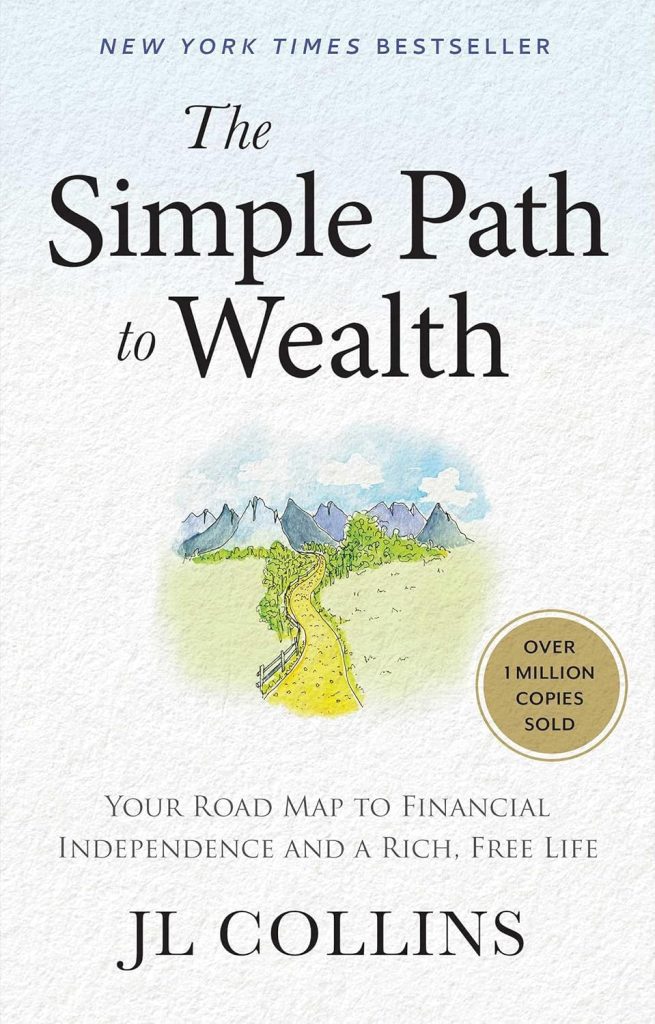
If you’re on the hunt for The Simple Path to Wealth review, then it’s likely that you’ve heard it’s a good book. Actually, it has been widely referred to as one of the best books ever written when it comes to personal finance. Letters to his daughter are what JL Collins originally set out to write, where he educated her on how best to take care of money.
They turned out into The Simple Path to Wealth which is today the bible for financial independence and those pursuing financial independence.
The reason why it works, though, is due to how the message is portrayed in the book. The book cuts the Gordian knot when it comes to investing. It eschews complex terminology and tips, favoring a one-man show. Collin’s approach is for you to save, investing in index funds, avoid debts, and allow compounding to work for you.
It is in this light that I have put together the The Simple Path to Wealth review for you. I will detail out the key themes, strengths, and weaknesses, as well as who will love the book.
Why is The Simple Path to Wealth Popular?
While most books when it comes to personal finance try to tackle all the topics at once, for example, from budgeting tricks to insurance and even advanced investing, Collins does the opposite. He hones down on one theme at a time. The crux of the book is on low-cost index fund investing.
The reason is just because data shows that most professional investors underperform on the market in the long-run. Instead of trying to outsmart the big dogs on Wall Street, Collins’ proffers a buying of the entire market through an index fund. The Vanguard Total Stock Market Index Fund (VTSAX) being his favorite.
This no-fuss approach is what has made the book take on a cult status in the FIRE community. If you are looking for The Simple Path to Wealth review, this is the essence of the book: simplicity trumps complexity.
Key Lessons in The Simple Path to Wealth
Save Aggressively and Stay Away from Debt
Collins iterates that in order to start accumulating wealth, you need to maintain high savings rates. High debts are clear enemies of wealth. By living below your means, there is more money that you can utilize to invest. Consistent investing is the bedrock of financial freedom.
Index Funds Are the Best Way for Most People
The book’s central advice is to invest majorly in VTSAX, or a similar total stock market index fund. In it, Collins educates on how such funds offer:
- The first is Diversification across many companies running in the thousands.
- The second is Low fees when compared to active funds.
- The third is Consistent outperformance of most professional money managers over time.
- For international reader, if you don’t have VTSAX in your backyard, the rule still applies, choose a low-cost, all-encompassing index fund.
Markets Recover
In a repetitive manner, Collins enlightens that, even though markets are bullish sometimes and there are corrections, the markets always recover. Panic selling is the real killer of wealth. The key in this light is to remain invested and also to ride downturns, trusting in the overall upward market trend over time.
Financial Independence Equals Freedom
Collins defines wealth to not be luxury but freedom. Having more cash in your pocket than is needed to cover your expenditure without having to be reliant on a paycheck is the greatest feeling of all. It is because it gives you the power of choice. The choice to work since you want to and not because you must.
It is the core of what the FIRE movement preaches and The Simple Path to Wealth gives one of the clearest guidelines on how to get there.
Strengths of the Book
Lack of jargon and Simplicity
Collins uses less finance gobbledygook. If you read his writing, it is just like any other person. Even those who have never invested, can easily understand Collins’ strategy.
Actionable Strategies
Instead of the multiple strategies, the book gives you a clear step-by-step plan. The step plan is for you to save and avoid debt, and then move onto investing in index funds.
Has a Long-term Approach
Collins views building wealth as a multi-decade project. This is the ultimate way to encouraging the reader to be patient and also consistent.
Easy to access
The back story of how the book was written. In other words, Collins composed letters to his daughter make the book feel personal. It almost sounds as if you are being written by a relative who is trying to give you vital financial advice.
Weaknesses and Limitations
It should be remembered that not all books are created equal. And a fair The Simple Path to Wealth review will point out a couple of weaknesses of the book;
- A narrow Focus: Although I see simplicity as a strength in this book, there are readers who could wish for more on other aspects, say for instance, real estate, small business ownership or even how best to venture into alternative investments.
- US-centric: Collins writes from the perspective of a US resident. As a result, his book is very much focused on US retirement accounts (ex., 401(k)) and Vanguard funds. If you are an international readers you may not be able to connect on some of the nuances.
- Leans heavily on stocks: The book tilts towards a heavy allocation in equities. Historically this is backed by data, but for those conservative investors will feel the book tilts toward one way too much.
Who Should Read The Simple Path to Wealth
This book is recommended for the following category of people:
- Beginner investors in their early years of their professional life.
- For those who are overwhelmed by all the investing jargon they hear, and just want a clear and actionable plan.
- For fans of the FIRE movement, and anyone looking to achieve financial independence, and who is in a hurry to do so.
- Parents, those who want to pass financial wisdom to their children and grandchildren.
- Seasoned investors can also gain from this book as wealth building is more about patience and simplicity and less about chasing stock tips.
Summary: Practical Takeaways You Can Apply Immediately
- Pay off your Debt: Start by getting rid of the high-interest debts that you have as soon as you can.
- Save More: Your aim should be to at least save 50% of your income. Or as much as you can manage.
- Invest Automagically: Set up regular transfers from your account to a low-cost index fund each month.
- Stay the course: You should not panic during the time of downturns. Market dips are normal as well as temporary.
- Think about the future: The true power of compounding comes into effect after decades and not months.
Comparison With Other Finance Books
When compared to other personal finance classics like Rich Dad Poor Dad and the Millionaire Next Door, The Simple Path to Wealth is straightforward and practical. It does not dwell much on the mindset or how to spend. In other words, Collins is direct on the mechanics of investing as opposed to the attitude.
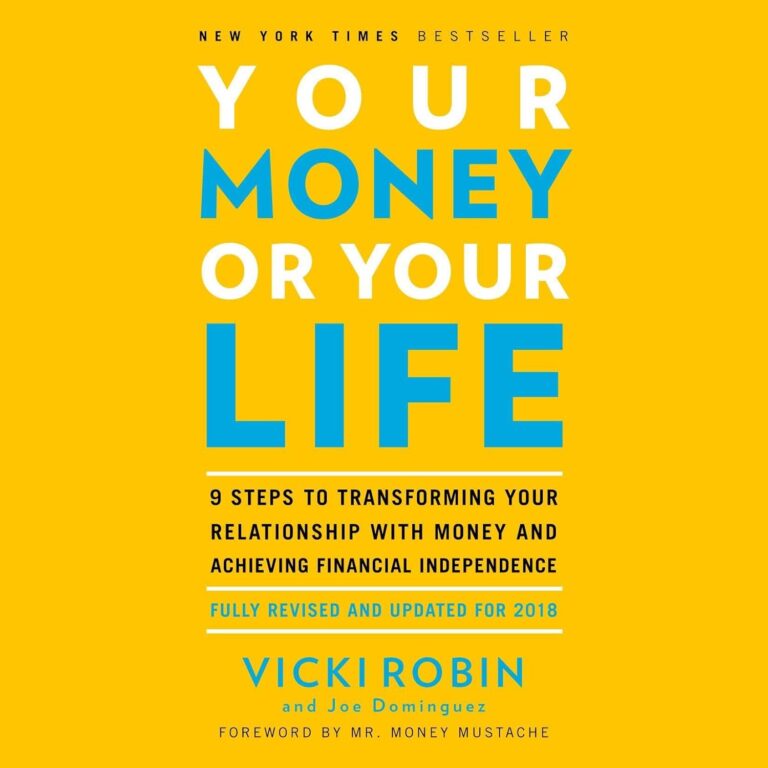
When compared to Your Money or Your Life by Vicki Robin, The Simple Path to Wealth feels less philosophical and more tactical. While Robin is more of redefining the meaning of money, Collins gives the straight arrow on growing it.
If you want a second index-fund book with the same message but a more step-by-step format, see our Millionaire Teacher review. Andrew Hallam lays out nine rules: spend less, start early, keep fees low and stay the course with a balanced mix of stock and bond index funds.
Conclusion: My Personal Thoughts
In an order to rate the book, I looked at both the pros and the cons. What I liked most in the book was the toning down of the message. Collins is direct in the approach and also very conversational. He is not out there trying to sell you a get-rich-quick plan and or complex strategies, but rather. He is giving you a path which is known to work (hint: the same one that both Buffett and Bogle have been preaching for decades).
What I feel is lacking though is the different risk appetites. Not everyone is willing to ride an all-stock portfolio, especially in the event of a market crash. Although Collins does account for this, the book has a clear predilection to stocks which may not be everyone’s cup of tea.
Still, for a book, it’s a great starting point for most people. If I were to rate it and to recommend a personal finance book to someone starting out, it would be near the top of the list.
Overall Rating: 9/10
The bottom line is that J.L Collins’ The Simple Path to Wealth lives up to its name. It is straightforward, practical and highly motivating. Most people with his knowledge on how one can achieve financial independence with a modicum of patience, discipline and an effective plan can achieve their dreams.
The book’s strengths do outshine its weaknesses, and, its central message of, simplicity trumps complexity, is one, all readers of the book need to take to heart.
If you are feeling jaded and overwhelmed by all the financial choices that you have in the market and not sure which direction to take, this book provides the clarity that you need. With this, it will help you to take back your financial power, and to build a future that is brimming with freedom.
Keep learning: courses on this topic
Self-paced courses to put this article into practice.
 Udemy
Complete Personal Finance Course: Earn, Save and Invest
A self-paced video course on budgeting, saving and investing, with practical lessons you can apply right away.
View course
 Udemy
Invest Like a Pro: Your First Steps in Wealth Creation
A self-paced video course on budgeting, saving and investing and investing basics, with practical lessons you can apply right away.
View course
 Udemy
From Welfare to Wealth: Earn Online & Invest Wisely
If you're living on a low income, receiving benefits, or stuck in survival mode — this course is for you.“Financial Independence on a Low…
View course




Leave a Comment