
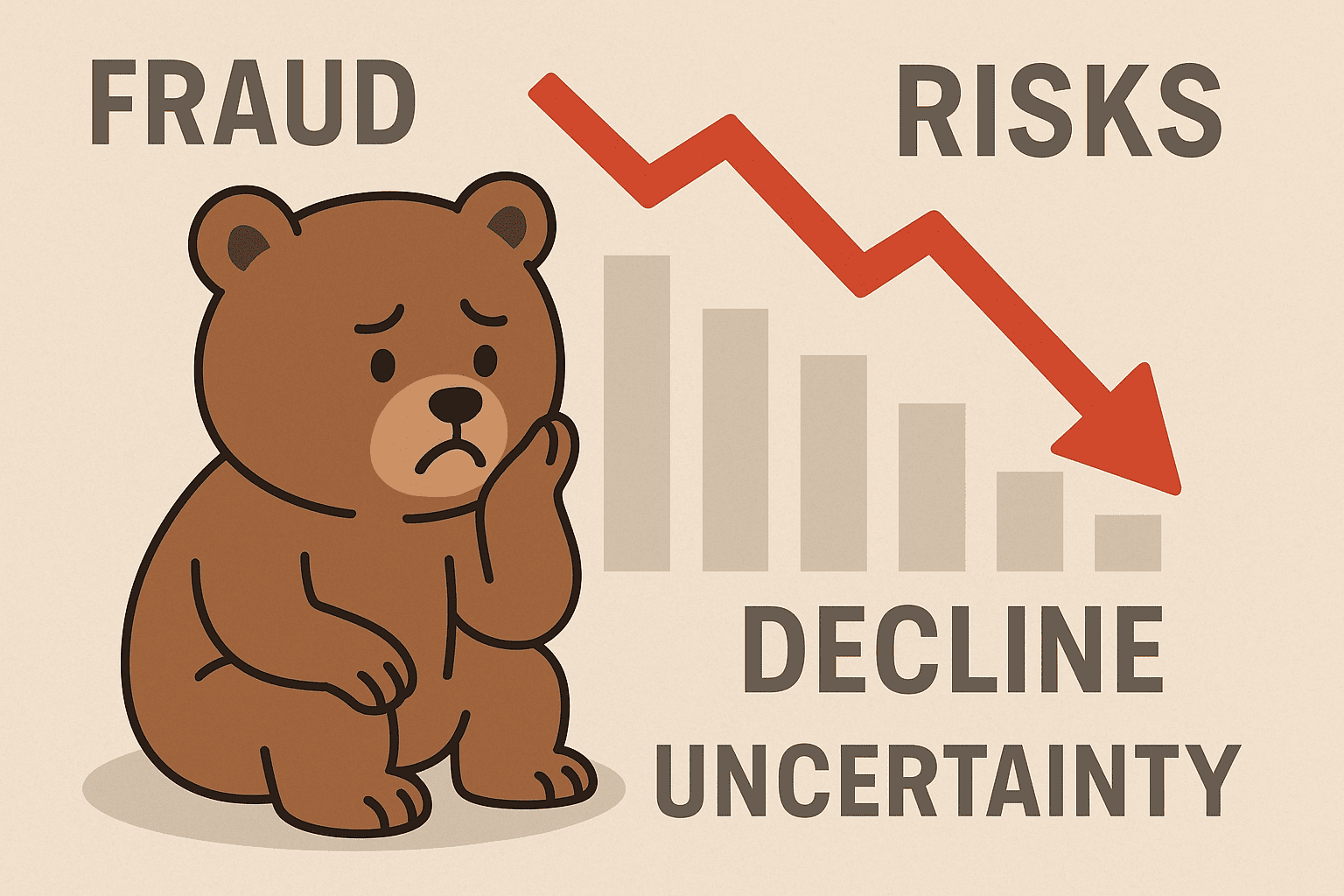
“Buy the dip” has become one of the most popular mantras among investors. In theory, it makes sense: buy low, sell high. But blindly applying this strategy can be dangerous. Not every dip is an opportunity—some are warnings.
Before you rush in when a stock plunges, it’s critical to evaluate why the dip is happening. Smart investing is about discernment, not reflex.
Here are 10 key red flags to help you decide when not to buy the dip—even when it looks tempting.
1. Allegations or Evidence of Fraud
When a company is under investigation or has admitted to accounting fraud, misreporting, or outright deception, steer clear. No matter how low the price goes, the risk of total collapse is high.
Examples: Enron, Luckin Coffee, Wirecard.
Why it’s dangerous: Fraud often leads to regulatory penalties, loss of investor trust, restated earnings, and eventual bankruptcy.
Takeaway: A falling knife with fraudulent roots should never be caught.
2. Structural Decline in the Business Model
Some dips are not temporary—they reflect fundamental erosion. If the company’s core product or service is becoming obsolete, price drops may be permanent.
Examples: Blockbuster (DVD rentals in a streaming world), Kodak (film photography in the digital age).
Why it’s dangerous: No turnaround plan can save a business that’s lost long-term relevance.
Takeaway: Don’t confuse industry disruption with market overreaction.
3. Repeated Earnings Misses and Guidance Cuts
If a company consistently underperforms expectations and lowers its future outlook, it may not just be cyclical—it could be deteriorating.
Why it’s dangerous: Markets punish repeated misses. Analysts downgrade. Capital dries up. And morale inside the company erodes.
Takeaway: One miss can be forgiven. A pattern is a red flag.
4. Insider Selling During the Dip
If executives are selling stock during a price drop, it may indicate a lack of confidence in the company’s recovery. Insiders know more than the market.
Why it’s dangerous: If they’re jumping ship while you’re getting in, ask yourself why.
Takeaway: Insider buying = confidence. Insider selling = proceed with caution.
5. High Leverage and Debt Risk
Companies with large amounts of debt can quickly spiral out of control in downturns. If earnings drop and debt payments remain fixed, default risk grows.
Examples: Evergrande (China’s property giant), Chesapeake Energy (pre-bankruptcy).
Why it’s dangerous: Leverage magnifies losses. In bad times, it becomes a death sentence.
Takeaway: Avoid dipping into highly leveraged firms during uncertainty.
6. Dilution Danger: Frequent Capital Raises
Some companies respond to a falling stock price by issuing more shares, diluting existing shareholders.
Why it’s dangerous: Every new share reduces your piece of the pie. Companies that continuously dilute can’t sustain long-term value.
Takeaway: If the dip is followed by an offering, step back.
7. No Clear Catalyst for Recovery
Is there a reason this company will bounce back? Without a clear driver—new leadership, product launch, strategic shift—the price may keep drifting.
Why it’s dangerous: Hope isn’t a strategy. Dips need a reason to recover.
Takeaway: Buy the dip only if you can explain the path to rebound.
8. Toxic Management or Culture
A company plagued by lawsuits, toxic leadership, or workplace scandals may struggle to recover even if the product is strong.
Examples: Uber under Travis Kalanick, Activision Blizzard’s harassment lawsuits.
Why it’s dangerous: Rebuilding a reputation takes time—and sometimes never happens.
Takeaway: Culture eats strategy. Avoid companies with systemic issues.
9. Broken Technicals and Institutional Exodus
If major institutional investors are dumping shares, and the stock breaks key technical support levels, it could signal broader loss of confidence.
Why it’s dangerous: Momentum matters. Large investors often lead the way in both directions.
Takeaway: Use technical breakdowns as a signal to wait for stability.
10. The Dip Is Actually a Re-Rating
Sometimes a stock doesn’t just dip—it re-prices permanently. A high-flying growth stock might have unrealistic expectations baked in. Once those are shattered, the valuation resets at a lower range.
Examples: Zoom Video after pandemic hype, Peloton post-2021.
Why it’s dangerous: What feels like a dip is just a new reality.
Takeaway: Don’t buy the past. Buy the future.
Final Thoughts: Not Every Bargain Is a Deal
Buying the dip can be a smart strategy—but only if the company is worth owning. Price drops are not the same as value opportunities.
Legendary investor Howard Marks warns, “There are no bargains without problems.” The key is knowing which problems are temporary—and which are fatal.
Before you click “buy” on that falling stock, ask yourself:
- Is the decline justified?
- What is the company’s financial health?
- Is there a path to recovery?
- Do I understand the risks?
Smart investors know that avoiding bad dips is just as powerful as catching good ones.
If you found this helpful, you might also like our post on When to Buy the Dip—the perfect companion piece to this guide.
Have you ever bought a dip and regretted it? Or avoided one that turned out to be a smart move? Share your lessons in the comments!




Leave a Comment