

The largest gains rarely come from cheap stocks. They come from seeing where the world is going before everyone else does.
Two years ago, I wasn’t trying to catch every hot stock tip or trade every market swing.
Instead, I asked myself one question:
“What will the world look like five years from today?”
That question changed everything.
Over the last two years, my portfolio grew by more than $1 million. You don’t need to be smarter than the market to achieve large returns.
You just have to stop investing like the market does.
Along the way, I made countless mistakes:
- Selling winners too soon
- Holding losers for too long
- Ignoring entire industries that later became massive opportunities
Eventually, I realised investing isn’t about trying to predict next quarter’s earnings.
It’s about spotting powerful long-term trends before Wall Street prices them into stock prices.
Here are some of the biggest lessons I’ve learned along the way:
- 1. Focus On Themes, Not Individual Stocks
- 2. The Best Investments Usually Feel Uncomfortable
- 3. Think Five Years Ahead, Not Five Months
- 4. Cut Your Losses Faster Than Your Ego
- 5. Winners Can Keep Winning
- 6. Ignore Short-Term Noise
- 7. Do Your Research Before You Invest
- Nebius (NBIS)
- Amprius Technologies (AMPX)
- Rocket Lab (RKLB)
- Palantir (PLTR)
- Xiaomi

1. Focus On Themes, Not Individual Stocks
If I could only share one lesson that improved my portfolio returns, it’d be this:
THEME > COMPANY
Investors waste too much time analysing individual stocks.
Comparing P/Es. Revenue multiples. Discounted cash flows. Price to sales ratios.
Those metrics are useful. Don’t get me wrong.
They matter far less if you’re evaluating a company within a slow-growth industry.
The largest winners over each generation tend to win because they ride on top of massive secular trends.
What were some of the previous generational trends?
- Smartphones 📱
- Cloud Computing ☁️
- E-commerce 🛍️
- Social Media 📷
- Electric Vehicles 🔋
Notice how investors didn’t necessarily “pick” the perfect company to own within each theme.
Instead, they bought companies that operated within each theme’s winning ecosystem.
Artificial Intelligence ☁️
AI is transitioning from software trend to new infrastructure.
Pretty soon, every industry will be “adopting” AI, creating enormous demand for GPUs, networking equipment, memory, data centres and software.
Sure, companies like NVIDIA may benefit. So do companies building AI software, companies providing infrastructure AI companies use and companies that build machines AI will control.
Space Economy 🚀
When I started researching space companies, nobody talked about space infrastructure.
SpaceX launches were celebrated. Satellite internet excited investors. But space infrastructure was overlooked.
Today, reusable rockets, satellite internet, space-based defense and space infrastructure are billion-dollar industries with room to grow for decades.
Next Generation Electric Vehicles 🔋🚗
The EV story is far from over. We’re just getting started.
Companies like Xiaomi may not be the biggest EV manufacturer ten years from now. But they are building the ecosystem to compete against Elon Musk.
That’s why I started paying attention.
If you’ve been following my writings, you’d know Xiaomi isn’t my new stock tip.
It’s a company that could benefit from one of the world’s largest industries shifting towards software and hardware ecosystems. 🔋🚗
2. The Best Investments Usually Feel Uncomfortable
There’s a reason why so many investors missed Amazon’s growth early on.
When everyone thinks a stock is amazing, most of the upside has already been priced in.
Some of the largest returns came when investors were still sceptical.
Investing doesn’t mean buying bad companies during market dips.
It means recognising great businesses before others realise it.
That’s why being contrarian pays off. Not because it’s cool to buy “ unpopular stocks .”
Contrarian investing is about looking beyond crowd sentiment to find truths the market is missing.
And when that happens, great opportunities exist.
3. Think Five Years Ahead, Not Five Months
Most investors worry about short-term events too much.
- Interest rates
- Earnings season
- Inflation prints
While short-term events matter to traders, investors have a different focus.
What industries will be bigger tomorrow?
The truth is…
Markets don’t punish companies that provide magnificently for society.
They may punish you the next few days if rates rise or inflation prints higher.
But if you invest in companies with decade-long growth opportunities, the stock price will eventually follow as revenue continues to grow year after year.
That’s why whenever I think of new investments, I picture myself writing this 2 years later:
“Paid $X for this company five years ago. Now it’s worth $Y. Here’s why I bought it.”
If my explanation sounds stupid to me, I don’t buy the stock.
If I can easily explain it to myself as if I already made the returns, I know I’m thinking long-term enough.
4. Cut Your Losses Faster Than Your Ego
I’ve wasted far too much money following this lesson:
Investors get attached to their investments.
We start defending them instead of admitting when we’re wrong.
We look for reasons why our investments might work instead of objectively analysing new information.
I used to think that good investors were patient.
Patience isn’t refusing to sell a stock you hate holding.
Patience is only holding stocks while the business fundamentals that made you buy them remain intact.
If executives mess up consistently… Problems justify holding if they were temporary.
If your thesis no longer exists… Sell.
Often times, selling a stock feels like you’re giving up.
But admitting mistakes quickly is the best way to protect your portfolio.
It allows you to buy again far better opportunities.
5. Winners Can Keep Winning
I’ve seen far too many investors sell their winners too early.
“I’ve doubled my money. It’s time to sell and realise my profits.”
But what if that stock goes up another 5x?
Smart investors let their winners run.
If the company continues growing revenue at an accelerating rate, stays true to its core competencies and industry tailwinds remain intact, there’s usually no need to sell yet.
Asking “How much more can this stock rise?” is often less important than asking:
“Has anything changed with my original investment thesis?”
If your answer is no, hold longer.
6. Ignore Short-Term Noise
There’s a reason why so many investors trade around earnings seasons.
Stay focused on long-term trends and your portfolio won’t care about quarterly market noise.
- Tariffs Paid?
- Interest rates rising?
- Fed will cut rates…
- Political headlines…
- Economic doomsday predictions…
Most of these stories end up forgotten within weeks. But in the short-term, markets react as if they’re permanent.
While stocks fluctuate based on hourly news, great companies stay focused on building for the long-term.
That’s why I pay way less attention to financial news and way more time studying annual reports.
At this stage of my investing journey, I rarely “trade” stocks based on short-term market fluctuations.
7. Do Your Research Before You Invest
Investing with high conviction doesn’t mean being overly confident.
It means being prepared.
When you fully understand a company you invest in, you won’t panic sell during market downturns.
You already know why you bought it. You know the risks. You’ve looked at the competitive advantages.
Eventually, your research will pay off when you hold confidently during volatile markets just because you know you did your homework.
High conviction without research is gambling.
Do your research, and let your confidence grow with experience.
The Winners That Helped Me Reach My Goals
These are the stocks that surprisingly helped me achieve my milestones:
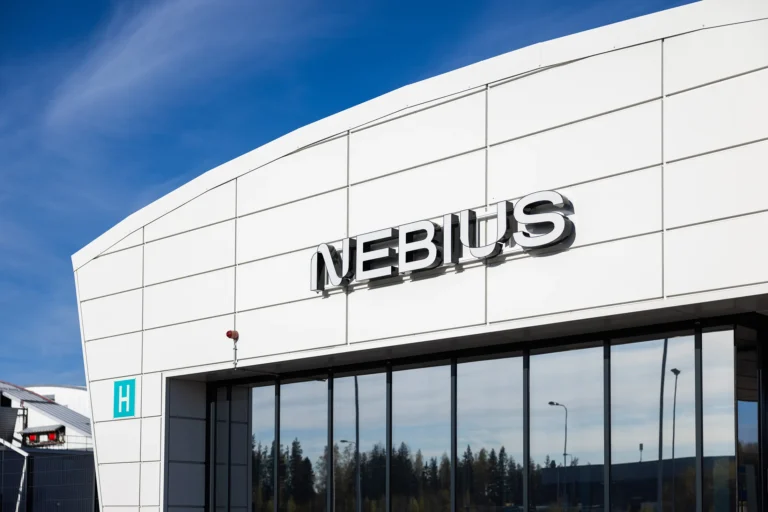
Nebius (NBIS)
AI was one of my largest focuses these past two years. Nebius became a strong performer because I bought early during the expansion of AI infrastructure worldwide.
It wasn’t just about chip companies. I bought Nebius because I knew AI globally was going mainstream. And companies like Nebius were going to benefit from rising AI adoption rates.
Amprius Technologies (AMPX)
Battery density is arguably one of the largest growth bottlenecks for drones, aerospace, automotive and advanced mobility.
While most investors were focused on individual EV manufacturers, I wanted to invest earlier where technology was still being proven.
If Amprius can prove its technology, you don’t just benefit from cars. You benefit from industries like advanced mobility, drones and aerospace. The applications are endless.
Disclosure: I no longer hold AMPX as a core position as of this writing.
Rocket Lab (RKLB)
I believed in the long-term vision of Rocket Lab.
Commercial space is still in the early stages. Everywhere I looked; there was growth in Launch Services, satellite deployment services and defence.
Rocket Lab isn’t just a rocket company. It’s building infrastructure to become a full-stack space company.
Palantir (PLTR)
Palantir was severely misunderstood for a long time.
By the time performance caught up, PLTR was already too expensive for me to buy.
But had I ignored price and focussed on what Palantir was building; I could’ve bought years before.
Palantir isn’t just middleware. It’s embedded across government, defense and enterprise systems. Not to mention, positioning itself for the age of AI.
Xiaomi
When most people think of Xiaomi, they think of smartphones.
If you’ve read my writings, you’d know I’ve been following Xiaomi for years.
I see an ecosystem company with immense engineering talent stepping into one of the world’s largest industries: Intelligent mobility.
Xiaomi doesn’t have to become the next Tesla.
If it leverages its competitive advantages, it has the potential to build an entire ecosystem of intelligent hardware products. That opportunity alone got me excited.
Disclosure: I no longer hold Xiaomi (HK.1810) as a core position as of this writing.
My Realisation
The stock market rewards those that learn where the world is going.
Not every trade will work out.
Mine sure didn’t.
I made dozens of mistakes.
- I bought companies that flat out disappointed.
- Sold great companies too soon.
- I underestimated risks.
Every mistake I made has taught me how to improve my investing strategy.
I no longer worry about:
“What stock should I buy tomorrow?”
Instead, I focus on:
“What industries are being disrupted? Which companies are building the future?”
I no longer spend hours looking at price targets or valuations.
Instead, I ask:
“Will this stock still be worth buying if it’s 50% more expensive?”
If the answer is yes, I know I’m investing with a long-term horizon.
Closing Thoughts
I wish I could tell you that I stumbled upon a secret formula.
Truth is, I didn’t.
Increasing my portfolio by over S$1 million happened because I changed my investing approach.
Slowly but surely.
I stopped chasing market trends.
I asked myself hard questions about the future.
And most importantly, I stopped investing based on near-term price movements and speculation.
Investing is a long-term game.
Try to understand where the world is going next decade, not tomorrow.
True winners in the stock market rarely look obvious today.
My piece of advice to anyone looking to build their portfolio:
Don’t invest in companies. Invest in the future they’re building.
Keep learning: courses on this topic
Self-paced courses to put this article into practice.
 Udemy
Investing For Beginners: How To Invest With Confidence
This Course is for you if ...1. You know nothing about investing.2. You are new to stock market investing and looking for a place to…
View course
 Udemy
Penny Stocks Masterclass: Trade & Invest Penny Stocks
When you think of penny stocks the first thing that comes to mind is probably fraud, right? You're probably thinking about the Wolf of Wall…
View course
 Udemy
How To Confidently Invest & Analyze Stocks Like an Expert
Are you tired of feeling overwhelmed by the stock market or unsure if a stock is actually a good investment? This course, "Investing in…
View course

Leave a Comment