
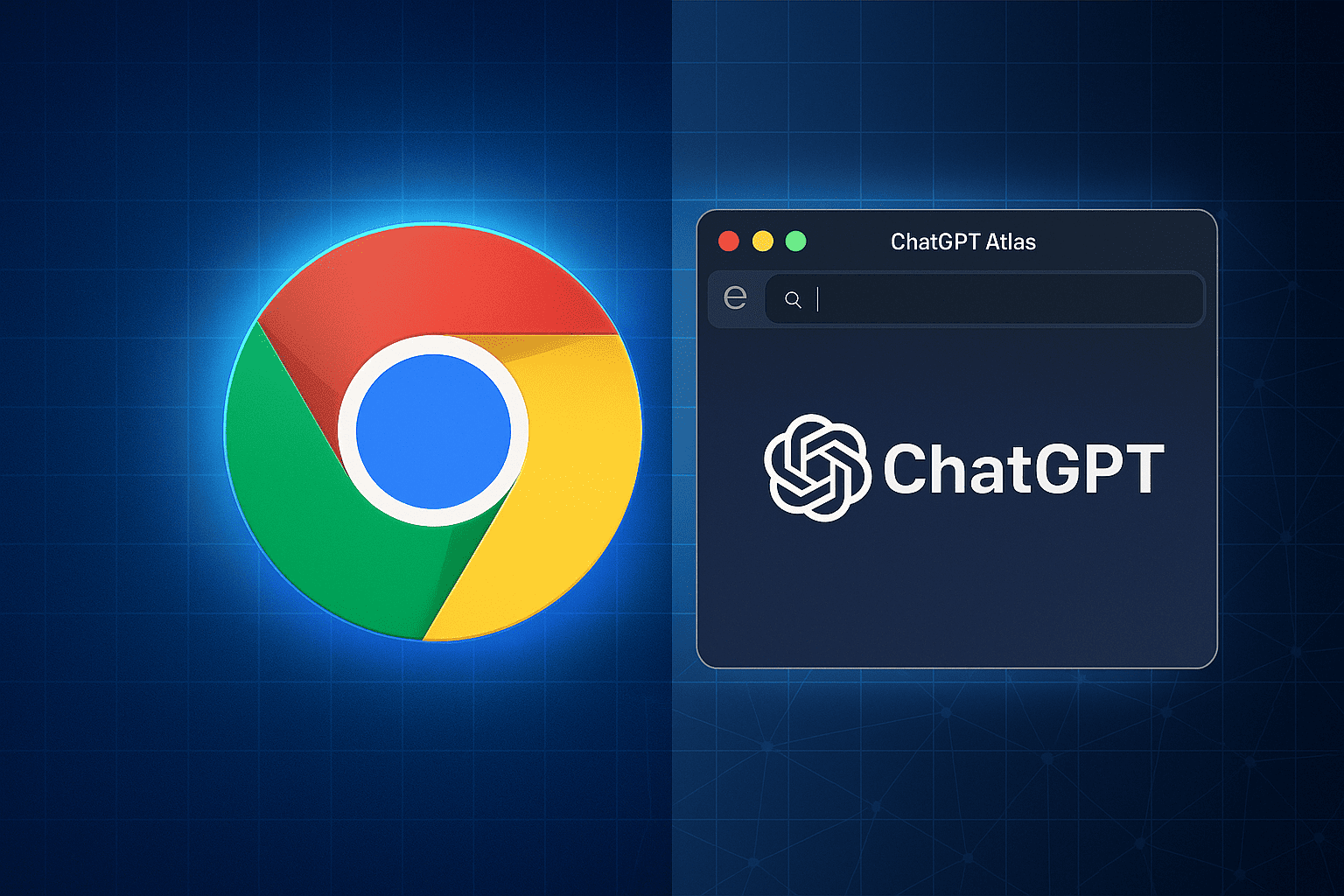
When OpenAI released its heavily rumored ChatGPT Atlas browser, many headlines sounded the alarm that a Google Chrome “killer” had arrived. Why? Because OpenAI is already one of the few companies that can credibly match Google in AI technology. So what exactly caused the Google stock to rally hard the same day a so-called rival launched a potential “Chrome killer?”
The answer is one of the greatest ironies in today’s technology landscape: OpenAI built its Atlas browser on top of Chromium, Google’s own open-source web engine. What this means is that every feature update, rendering improvement, or performance tweak that OpenAI ships on top of Atlas still rides on a foundation Google created. In other words, the “competitor” is still, at least indirectly, part of Google’s ecosystem.
This again reinforced a central truth about the company’s market power that investors too often underestimate — Google’s power doesn’t come just from having the best product. It also, and perhaps more critically, comes from its unrivaled distribution moat.
The Story Behind the Google Stock Rally
OpenAI’s announcement, at first blush, should have been an investor catalyst for fear. A new AI-native browsing experience might have been enough to siphon off search traffic from Google.com and weaken its ad business, right?
Instead, institutional investors recognized exactly the opposite. The market was rewarded Google stock because the competitive threat was overstated — and because the underlying technology stack of Atlas is still one that ultimately benefits Google.
As traders realized that OpenAI was building Atlas on Google’s Chromium project, the same open-source project that powers Chrome, Microsoft Edge, Brave, and Opera, the narrative around Alphabet’s stock quickly reversed course.
Far from an existential risk to Google’s dominance, the news showed that Atlas’s launch further locked OpenAI into Google’s ecosystem. This was validation, for investors, of how Google’s platform integration and distribution advantages make it nearly impossible to displace as an incumbent.
The Chromium Advantage: How Rivals Feed the Ecosystem
Chromium may be open-source, but it is one of Google’s most underappreciated strategic assets. Every time a company like Microsoft, Opera, or now OpenAI builds a browser on Chromium, they are improving a shared codebase that indirectly helps Google in multiple ways.
These browsers create advantages for Google by:
- Expanding the installed base of Chromium-based web rendering engines across more devices.
- Enforcing standards around Chrome-compatible APIs among web developers.
- Reducing fragmentation of the web, making it more likely to be optimized for Google Search and Ads.
In other words, even Google’s competitors help Google’s Chrome ecosystem just by operating. They expand Google’s influence, market share, and distribution power every time their browsers gain adoption.
This is why when OpenAI announced the browser, the market didn’t punish Alphabet’s stock but rewarded it. Google’s so-called “Chrome killer” was still running on Google’s rails.
Distribution, Not Innovation, Is the True Moat
The public market’s fixation is always on shiny new innovations — AI models, voice assistants, browser updates. But in digital ecosystems, the most critical strategic variable isn’t product differentiation. It’s distribution.
Google doesn’t just own the world’s most popular browser. It owns:
- The world’s largest search engine, responsible for over 90% of all search queries.
- Default first-party placement on Android, Chrome, and Google services.
- Native monetization systems, like Google Ads and YouTube, that integrate natively with its ecosystem.
- Strategic partnerships with OEMs that pre-install Google products on virtually every major Android device.
Even if OpenAI’s browser were somehow more technically capable than Chrome (which, at this point, is pure speculation), it still faces an uphill battle in distribution. Chrome is not just a browser. It is the default window into the internet for the vast majority of users worldwide.
This is the heart of Google’s distribution moat. A network of cross-product defaults, integrations, partnerships, and lock-ins that keep users within its orbit.
AI Overviews: Google’s Quiet Revolution Inside Search
The biggest competitive threat to the value of Google Search is always the existential fear that AI will cannibalize its ad business by reducing click-through rates on organic results.
The easiest way to show that would be to run AI at scale inside the search product. Google has done this in an industrial way by now, with its new AI Overviews (AI-generated summary at the top of search results). It’s now live for over 2 billion users, with strong traction.
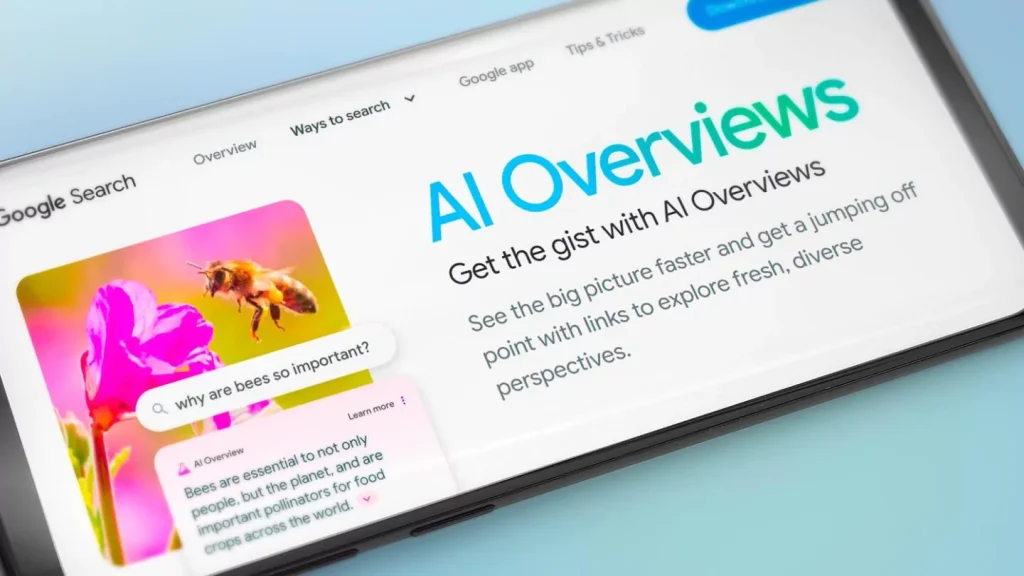
AI Overviews is no prototype. It’s mass adoption of AI inside a core revenue-generating product. This should have been the worst-case use case for Googlers over the last 12 months. Yet, it’s become a case study in AI deployment with zero meaningful disruption to clickthroughs or monetization.
In fact, in Google’s recent Q2 earnings call, management said they were monetizing at about the same rates for AI-Generated Search Results as organic search ads. In other words, this thing that investors were collectively so worried about in 2023 is now going live, monetizing at full rates, and has zero evidence it is disrupting or cannibalizing Google’s core.
This is critical for Google bulls because it neutralizes one of the biggest concerns hanging over Alphabet’s stock: the fear that generative AI would reduce Google’s search ad business. Instead, Google is showing that it can increase engagement (AI Overviews improve average session duration, time on site, etc.) while also monetizing.
Gemini AI’s Quiet Rise Inside Google
An underappreciated narrative in all of this is just how fast Google has been able to push Gemini, its next-generation AI model suite, inside other products.
ChatGPT gets most of the headlines. But Gemini has quietly been taking share in its priority segments: Enterprise and Developers.
Internal estimates, third-party usage trackers, and on-the-ground developer commentary has shown an acceleration of Gemini adoption inside:
- Google Workspace (Google Docs, Sheets, Gmail, etc.)
- Android device integrations
- YouTube integrations
These are massive and growing distribution surfaces, again, that OpenAI simply can’t access.
By vertically integrating Gemini into as many Google products as possible, Google is executing the playbook that OpenAI would be happy to own but can’t. Build AI into products people already use every day.
The fact that these are revenue-generating products, like Google Search, Chrome, YouTube, Android, and Google Ads, also means the monetization gains from these innovations are all additive to core revenue, not just cannibalized from it.
These two dynamics, together, are why investors see OpenAI’s competitive push as much more of a threat to Microsoft’s Copilot ecosystem than Google’s.
Why Investors See Google as a Long-Term AI Winner
Google stock rallied after OpenAI browser launch reflects a broader reevaluation among investors. For months, the market narrative had been one of fear, with Google widely seen as having “fallen behind” in AI. But the reality is Google has quietly been scaling AI inside a growing number of its products while others chase shiny new things.
Here are three factors that explain why Wall Street is no longer so bearish on Alphabet:
- Ecosystem Lock-In — Rivals like OpenAI are still locked into Google’s platforms and codebases (e.g. Chromium), giving Google indirect leverage over their success.
- Monetization Parity — Search ads with AI enhancements continue to monetize at approximately the same levels as traditional organic search.
- Distribution Moat — With search volume growing on Android, YouTube, Chrome, and Search, Google has the most defensible AI deployment pipeline on the planet.
Even in a bear case where OpenAI gains some share from Google in an absolute sense, the addressable market in AI-augmented browsing and search is growing so large that Google should still be able to disproportionately capture new monetization.
The Psychological Shift on Wall Street
Markets are narrative machines. Narrative machines move on the flow of new information, but it often takes time for the market to digest that new information and truly change course.
For much of 2023, Google’s prevailing narrative was one of fear. The company was seen as slow, bureaucratic, and “behind” its upstart rivals. The fear was that Google would always be too large and bureaucratic to execute on the AI-first world with the same speed and agility as its nimbler competitors.
Steady earnings have since shifted this narrative. Google has shown it can industrialize AI deployment at scale and make progress inside its most important products without shaking the core business. This is a rare thing among Big Tech, which has conditioned investors to expect far more seismic disruption.
The more recent Google stock rally after OpenAI’s browser launch wasn’t just a one-day event. It symbolizes a deeper investor realization: Google doesn’t need to “outrun” OpenAI at every frontier. Google only needs to do a better job integrating AI across the most defensible and profitable distribution network in the business.
The Chrome Irony: How Google Has Won This “Battle” Before It Starts
OpenAI’s ChatGPT Atlas browser may have siphoned off some search traffic that would have otherwise gone to Google.com and given it the veneer of a “Chrome killer.” But here’s the rub:
At the end of the day, what makes Google’s browser as dominant as it is today isn’t feature differentiation or better AI models. It’s its ownership of the underlying platform, the plumbing of the modern internet.
Think about this: As hot as Atlas is, when a user opens the OpenAI browser for the first time, they have to decide: Go to ChatGPT.com? Or Google.com?
Put simply, until OpenAI or some other new entrant has proven they can not only break through the noise but win share, they remain incumbents’ prisoners of success.
OpenAI still relies on Google’s Chromium to render and process its web content, on Google’s standards and engineering to push new web features, and on its ecosystem to draw eyeballs to the idea of an AI-native browsing experience.
In this sense, OpenAI has already, if accidentally, validated Google’s strategy.
The new battleground in the modern internet ecosystem isn’t who can build the flashiest new browser. It is who controls the access, monetization, and defaults across the highest number of devices and form factors in the market.
In that fight, no one is even close to Google.
Keep learning: courses on this topic
Self-paced courses to put this article into practice.
 Udemy
From Welfare to Wealth: Earn Online & Invest Wisely
If you're living on a low income, receiving benefits, or stuck in survival mode — this course is for you.“Financial Independence on a Low…
View course
 Udemy
How to Invest in Stocks, Mutual Funds & ETFs for Beginners
Are you ready to take charge of your own investment accounts? Make informed decisions about how to manage your money and let it work for…
View course
 Udemy
Personal Finance from Zero: Budget, Save, Borrow & Invest
Money touches every day of your life, yet almost nobody is taught how it works. Where does your pay go between payday and the end of the…
View course





Leave a Comment