
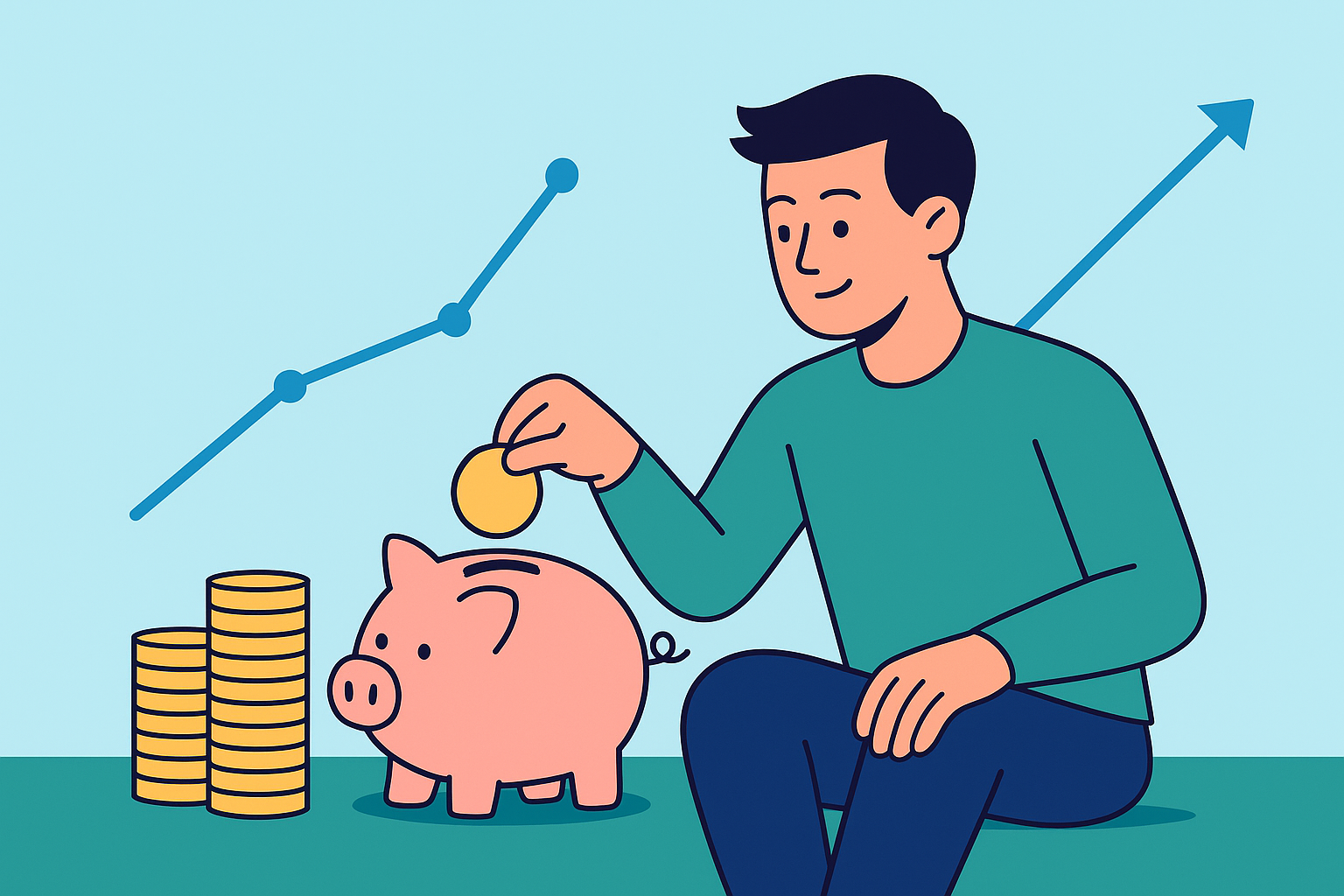
Saving $100,000 before 30 feels impossible to many people. You might feel you earn too little, pay too many bills, or are already behind your peers. The truth is six-figure savings is 100% achievable with the right system, timeline, and mindset. You don’t need an eight-figure salary or superhuman discipline. You only need a system that works.
In this post, I will share the real path to your first $100,000, why getting there early is important, and how average people get there much faster than they think.
Why Saving $100,000 Is Important
There is nothing special about $100,000, but reaching it early in life unlocks several advantages.
First, your money starts working harder than you. At a 7% return, one hundred thousand dollars alone grows to nearly $200,000 in about ten years, even if you add nothing else.
Second, your financial confidence transforms. You stop worrying about emergencies, layoffs, or unexpected bills. You gain freedom to take career risks, start a business, change industries, or move to a new country because your finances are secure.
Third, reaching this milestone forces you to build habits that will serve you for decades. People who save their first $100,000 reach $200,000 much faster on average because they already know what works.
Step 1: Reframe the Goal Into a Simple Annual Target
Saving $100,000 sounds daunting. The secret is to break it into time-based targets. If you want to get there between ages 20 and 30, that is ten years. Divide by ten, and you now only need to save $10,000 per year or $833 per month.
The number gets even smaller when you include investment growth. A simple example:
- Save $8,000 per year
- Invest in low-cost index funds
- Earn average 7% annual return
You will hit $100,000 within your twenties even with modest contributions. The key is to be consistent not perfect.
Step 2: Focus on Increasing Income Early Rather Than Cutting Everything
Most take the slow, painful path of cutting lattes, skipping meals out, and restricting every life part. The problem is that willpower alone is a poor foundation.
The faster track is to aggressively grow your income in your twenties. This is the period where your earning power can expand fastest as employers value energy, adaptability, and hunger to learn.
Practical ways to increase income before age 30:
Start with strategic job switching.
Do not stay at your first job too long. Salary jumps tend to be the largest for early career workers when they change companies. Do not switch carelessly, but also do not stagnate. A 10-20% increase compounds faster than saving small amounts from daily expenses.
Build one high-value skill
Your twenties are for experimentation, but eventually pick one skill that compounds: software, sales, analytics, design, product management, digital marketing, or any marketable skill companies fight for. A proven skill raises your income floor permanently.
Add a small income engine on the side.
Side income accelerates savings dramatically. Examples include freelancing, tutoring, affiliate content sites, part-time consulting, or weekend gig work. Even a few hundred dollars a month compounds into thousands over the years.
Step 3: Automate Saving & Let Investments Do the Heavy Lifting
Discipline is easy when you remove manual decisions. Set up automatic monthly transfers into long-term investment accounts, ideally right after payday. This prevents lifestyle creep and temptation.
Ensure your savings are invested in simple, low-cost instruments like broad market index funds, diversified ETFs, or country-specific market trackers. The goal is not to outperform professional traders. The goal is to participate in the long-term growth of the global economy.
A simple example:
- Transfer $600 per month
- Invest it every month without fail
- Continue for 10 years
This alone gets many people close to or beyond $100,000 depending on market returns.
Step 4: Control the Three Expenses That Matter Most
Small expenses do not make you poor. But the big three expense categories if out of control will drain you:
Housing
Renting expensive apartments too early is a common wealth killer. Sharing a place or staying with family for a few years can turbocharge savings. Many hit six-figure savings by keeping housing costs modest in their early 20s.
Transportation
Buy a car with loans if you must but avoid it if possible. Cars are wealth traps through depreciation, insurance, maintenance, fuel, and interest. Public transport or second-hand cars help keep monthly spending low.
Lifestyle inflation
Your 20s are when lifestyle inflation hits the hardest. Upgrading phones, branded clothes, weekend partying, or expensive travel all slow your progress. You don’t need to live cheaply, but avoid emotional, not intentional, purchases.
Step 5: Save In Seasons Instead of Forever
You don’t have to live like a monk for ten years to get to six-figure savings. Instead, live intentionally in seasons.
Commit to an 18-month sprint for example:
- Side hustle
- Avoid major lifestyle purchases
- Redirect all bonuses, tax refunds, etc. to investments
- Keep expenses fixed while your income rises
In eighteen months, many people save $20,000 – $30,000. Once you complete the sprint, you can relax the budget a bit and enjoy the fruits of your labor.
Life is not a constant sacrifice but concentrated effort plus sustainable habits.
Step 6: Keep Cash Flow Simple
Don’t overcomplicate with spreadsheets or 15 budget categories. A simple system works best:
- Income comes in
- Automatic investments move out
- Spend guilt-free whatever remains
This keeps your financial life clean and ensures you save before spending rather than the reverse.
If you want more structure, use the 50-30-20 model (50% needs, 30% wants, 20% savings). Ratio is less important than the habit.
Step 7: Protect Yourself From Setbacks
Saving is easy until life surprises you. Medical bills, layoffs, or emergencies drain your momentum. Build a small emergency fund of 3-6 months expenses. Keep it in cash or a safe account. This safety buffer prevents you from withdrawing long-term investments in a crisis.
Once your emergency fund is healthy, continue building the hundred-thousand-dollar portfolio without fear.
Step 8: Understand Your First $100k is the Hardest
Charlie Munger famously said the hardest part of building wealth is getting the first $100k. He was right. It requires the most learning, discipline, and patience. Once you reach this milestone, the power of compounding really accelerates.
You start earning money while you sleep. You gain confidence in your financial future. You feel ready to take on bigger goals like home ownership, business investments, or generational wealth.
Your first $100,000 is not just a number, but proof you can design your financial destiny.
Final Thoughts
Saving $100,000 before age 30 is not about perfection, but consistency, smart income decisions, and avoiding lifestyle traps that sap your momentum.
Thousands of average people reach this milestone every year through simple repeatable steps. Start now, automate progress, and focus on increasing your income. The sooner your money begins compounding the faster you reach a financially stable, flexible, opportunity-filled life.
Keep learning: courses on this topic
Self-paced courses to put this article into practice.
 Udemy
Complete Personal Finance Course: Earn, Save and Invest
A self-paced video course on budgeting, saving and investing, with practical lessons you can apply right away.
View course
 Udemy
Invest Like a Pro: Your First Steps in Wealth Creation
A self-paced video course on budgeting, saving and investing and investing basics, with practical lessons you can apply right away.
View course
 Udemy
2025 Personal Finance Blueprint: Budget, Save, Invest & Grow
Ready to take control of your financial future? This course is your all-in-one guide to building wealth with clarity and confidence—no…
View course




Leave a Comment