

Money is freedom, choices, and peace of mind. An early start on your personal finance journey helps you develop money-management skills that can free up your time and energy in the long run. Whether you’re just starting your first job or already deep in debt, getting financial awareness sooner is one of the best investments you’ll ever make.
The reason many people avoid their finances? It’s daunting to even think about where to start. But it doesn’t need to be. In fact, once you wrap your head around some basic concepts and implement a system, real change is inevitable.
Step 1: Know Where You Stand
- Financial planning starts with an honest assessment of where you are.
- Income: Net income (after-tax) from salary, business, and side hustles.
- Expenses: All outgoing cash flow—rent, bills, groceries, subscriptions, etc.
- Debt: Credit cards, student loans, car loans, etc.
- Savings & Investments: Cash, stocks, and retirement accounts held.
As a simple rule, if you can’t tell someone exactly where all your money went last month, then you’re not managing it—you’re reacting to it.
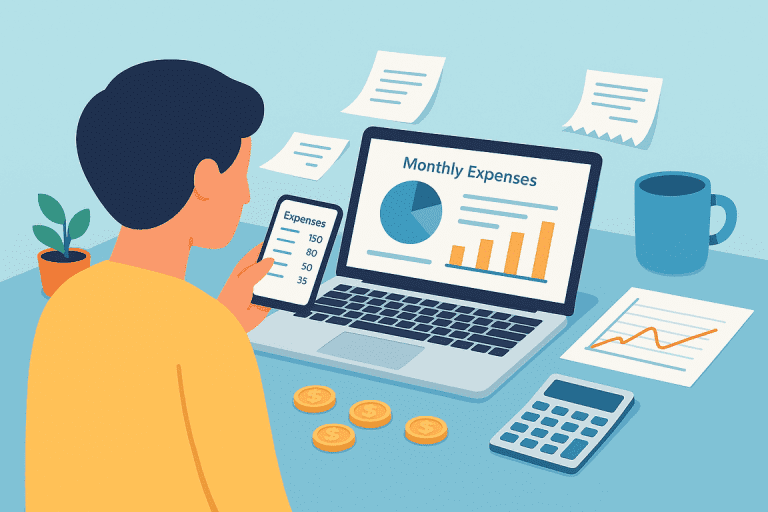
Tip: If possible, track your spending with a budget app like YNAB, PocketGuard, or Money Manager to automatically categorize your expenses. You can also track manually for a month with a spreadsheet. Tracking expenses is more about awareness than perfection.
Step 2: Create a Simple Budget
Budgets are the framework that help you give your money a purpose.
Here’s one of the simplest yet effective budgeting systems, the 50/30/20 rule:
- 50% for needs (rent, utilities, groceries)
- 30% for wants (entertainment, travel, dining out)
- 20% for savings or debt repayment
If you’re carrying high-interest debt, funnel most available cash into debt repayment first before discretionary spending.
Tip: Automate your transfers. The day your paycheck hits, have the savings/investment amount automatically transferred to a separate account. Out of sight, out of mind.
Step 3: Build an Emergency Fund
The biggest financial hazards are unplanned: a medical emergency, a layoff, or an urgent trip.
An emergency fund serves as a buffer to stop you from falling back on high-interest credit cards during rough patches.
Goal: 3 to 6 months’ worth of essential expenses.
If that goal seems too distant, just start with $500. Build it little by little from each paycheck.
Tip: To make your emergency fund separate and less accessible, open a high-interest savings account labeled “Emergency Fund”. Out of sight, out of mind.
Step 4: Pay Off High-Interest Debt
High-interest debt is your financial worst enemy, robbing you of wealth before you even make a dollar.
Credit cards, payday loans, or any debt over 18–25% annual interest should be wiped out before you start investing aggressively.
Two popular methods for tackling debt:
- Debt Snowball Method: Focus on smallest debt first for wins early.
- Debt Avalanche Method: Focus on highest-interest-rate debt first for most savings.
Tip: Consolidate debt into a lower-interest personal loan if possible. Then, avoid taking on new debt as you’re paying off old debts.
Step 5: Save for Long-Term Goals
Short-term goals are needs, long-term goals are wants. Once your current needs are met, start planning for the future.
Examples of long-term goals:
- Buying a house
- Funding your child’s education
- Retirement savings
You never think you’ll ever need retirement savings until you’re already there. The younger you start, the smaller the monthly contribution can be.
Example: Saving just $200 per month with a 6% return rate can accumulate to almost $200,000 in 30 years.
Delay by 10 years, and you only have $100,000.
Step 6: Automate Investments
Investing early isn’t just for stock market gurus.
It’s more about putting your money to work via low-cost, diversified index funds or ETFs. Index funds are managed portfolios that match the returns of the stock market with minimal fees. They historically outperform most active investors over the long run.
Tip: Set up auto-investing each month into:
A broad-based index fund or ETF (e.g. S&P 500 ETF)
- A global diversified ETF
- Retirement accounts (401k, CPF Investment Scheme, or IRA equivalents by country)
Don’t try to time the market. Simply do “time in the market”, not “timing the market.”
Step 7: Don’t Forget Insurance
Budgeting also means protecting your assets with good insurance.
Illness, accidents, or unfortunate events can cost you years of savings if you’re uninsured.
Priority insurance cover types to get:
- Health insurance: Non-negotiable.
- Term life insurance: To protect your dependents if something happens to you.
- Disability insurance: To protect your income if you’re unable to work.
Tip: Don’t buy the more expensive whole life or investment-linked policies until you have the emergency fund and investments in place. Stick to simple term coverage with affordable premiums.
Step 8: Keep Tracking and Learning
Your personal finances are not a static spreadsheet you do once. They’re a dynamic practice that you should monitor and adjust to as your life changes.
Track your expenses for a few months, then regularly update your budget.
Celebrate small wins—like finally achieving your first savings goal, or paying off that first credit card. Momentum builds slowly, then all of a sudden.
Reliable Resources to Learn From:
- Books: The Simple Path to Wealth by JL Collins; Your Money or Your Life by Vicki Robin
- Websites: BearSavings.com; Investopedia or Mr Money Mustache
Step 9: Make Systems, Not Willpower
Willpower and motivation alone won’t work for building consistent financial habits.
Consistency over intensity is key.
Implementing small financial habits one at a time is more effective than overhauling all your finances in one weekend. These daily rituals are your pillars of support:
- Pay yourself first (automate savings).
- Track your net worth monthly.
- Audit all your subscriptions every quarter.
- Raise investment contributions every time your salary increases.
Systems should be designed to operate automatically on autopilot.
You don’t rely on motivation—instead, you build the structure that makes doing the right thing frictionless.
Step 10: Avoid Lifestyle Inflation
If you get a raise or promotion, the first thing you do is upgrade your lifestyle?
New apartment, car, restaurants, gadgets. But then you realize it all cost a lot more than you thought, and your savings is still stagnant.
Lifestyle inflation is the result of valuing perceived wealth rather than true wealth.
Real wealth isn’t your income, it’s your net worth. What you earn versus what you keep.
Here’s one way to do better with your next raise:
50% rule: Put 50% or more of your raise into savings or investments before you start upgrading your lifestyle. You can afford to spend more now, and yet still be building your net worth faster.
Step 11: Surround Yourself with Positive Financial Vibes
Who you hang around with matters a lot more than you realize. Do you have friends who are overspenders or prey to get-rich-quick scams?
Then the pressure to “fit in” will make it hard to stay committed to your financial goals.
Avoid the noise. Find online and offline communities who are talking about saving, investing, and building for the long term.
Read the right books, listen to the right podcasts, follow the right YouTube channels and social media influencers.
Those who educate vs those who just flaunt.
Step 12: Don’t Race Against Others
Financial journeys are personal.
Try not to compare your financial journey to others around you. Everyone comes from different starting points with different background, income, and debt.
The speed doesn’t matter as long as you’re moving in the right direction.
Celebrate your milestones, no matter how small they are.
Saving the first $1,000. Paying off the first credit card. Switching to a better bank account. The wins can be small, but the momentum builds.
Final Tip: Learning by Doing
As with any financial journey, you don’t need a finance degree to start. But you do need some time, discipline, and a dose of curiosity.
Start with tracking your spending. Save before you spend. Invest. Protect your downside. Repeat these steps in cycles until you look back a few years later and marvel at how far you’ve come.
To put your personal finance journey into practice, try BearSavings’ Financial Freedom Calculator or browse through our Daily Savings Tips for ideas to get started.
Keep learning: courses on this topic
Self-paced courses to put this article into practice.
 Udemy
Get Out of Debt, SAVE, Increase Wealth, Invest In The Future
Personal Finance, Investing, and Retirement: Get Out of Debt & Get Your Money to Work For You. Do you work hard for your money? Get your…
View course
 Udemy
Best Way to Invest: A Step-by-Step Guide to Building Wealth
Are you ready to take control of your financial future and start building lasting wealth with confidence, clarity, and proven strategies?…
View course
 Udemy
Personal Finance on Autopilot with AI: Budget, Save & Invest
Most money advice fails for one reason: it depends on willpower. This course replaces willpower with systems. You'll build a complete…
View course




Leave a Comment