

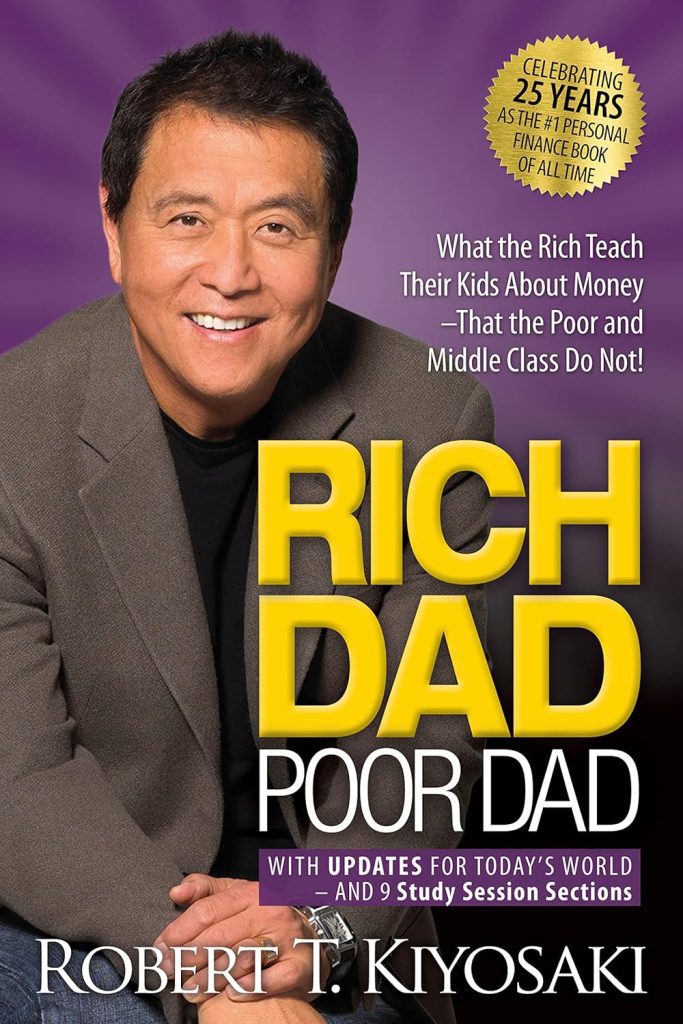
I bought Rich Dad Poor Dad many years back and I still remember the day. I opened up the package on the sofa with a cold drink by my side. As I picked up the copy, I started flipping through the pages with heightened curiosity as I knew it was something special. I was not wrong. Rich Dad Poor Dad changed my money mindset completely.
When I picked up the book in 2008, I had no clue how life-changing it would be. This easy-to-read money masterclass has a way of hitting you in the right place (and the wrong one too). It has been the most cited book of all time and for many good reasons.
After all these years, I can still recall some of the major highlights when I first read the book. If you too, have ever felt the ‘education system didn’t prepare you for this’ money challenges in life, this book is for you.
Below is a summary of my 7 major takeaways from Rich Dad Poor Dad that have stuck with me all this time. These are principles that changed the way I look at money, work, career, and investing.
Lesson 1: The Rich Don’t Work for Money
The book starts with one simple sentence: the rich don’t work for money.
Wait, what? Now this was a bit extreme. But the more I read into the section, the more I realized it was about getting out of the “employee” mentality. As young Robert was schooled by Rich Dad, financial independence came when one stopped bartering their time for money and started to create income-generating assets—whether they are at work or not.
Instantly, I started re-evaluating how I looked at side hustles, passive income, and scalable income streams.
Lesson 2: Assets Vs Liabilities: Understand The Difference
This one is so common that many people quote it without reading the book. The author coined the term “RICH mom poor dad” from his two father figures in the past.
An asset is anything that puts money in your pocket. A liability is anything that takes money out of your pocket. Simple right?
As the book says, this one simple truth has killed most millionaires. Despite how many house-buying lessons they have, many people get this one wrong. In fact, a lot of these people consider their houses as an asset even though their mortgage is eating up their whole income and leaving them with a big pile of cash at the end of the month. To Kiyosaki, this is a liability!
This one paradigm shift made me re-evaluate my things a different way. I now see everything I own from the angle, “Is this an asset or a liability?”
Lesson 3: Financial Education is More Important Than A High Salary
Did you know that being financially literate can be more valuable than earning a high salary? Yep! That is what Kiyosaki is saying.
As a result, Rich Dad wanted his kids to know how money works. According to him, financial literacy doesn’t necessarily mean how much you earn, but more on how much you keep. This inculcates things like how to save, how to tax, how to invest, and so on.
The truth is, most of us may have these “good” paying jobs. Yet, we live paycheck to paycheck because our financial knowledge is limited.
Lesson 4: Work to Learn, Not to Earn
Kiyosaki put in more work in sales and marketing even though his heart wasn’t there. He worked to learn the skills required to start his own business and not to earn.
I liked this lesson because it changed the way I looked at any task that I do. Skills like negotiating, communication, and other knowledge-based expertise is something I can take with me wherever I go.
Lesson 5: Your Mindset is Your Biggest Asset or Liability
Mindset was another lesson that most people are not aware of. As we know, the book has two father-figures: The Rich Dad and The Poor Dad.
Kiyosaki pointed out that the poor dad had a scarcity mindset. He was always thinking of losing money, making things secure, being conservative, and avoiding risks at all cost. The rich, on the other hand, had an abundance mentality. They took risks but without being reckless. This meant they were willing to learn by doing.
Since reading the book, I noticed that this limiting belief and my fear of taking risks kept me away from making more money.
Lesson 6: The Power of Passive Income
Passive income was not new to me, but Rich Dad Poor Dad made me to look at it in a different way. I realized that this is the only way to true financial freedom.
Passive income is an income stream that is derived from real estate, online businesses, dividends, etc. These are the things that grow even when you are not at work.
Lesson 7: Fear and Cynicism Kill Opportunity
The last lesson on Rich Dad Poor Dad, however, hit harder than I expected. Kiyosaki revealed that his biggest critics were fear and cynicism.
He went ahead to explain that the moment he told people about real estate or stocks, they were quick to question his ideas by telling him, “real estate is too risky.” Or “you can’t trust tenants.” He stated that while many people came to him with money, many others gave him ideas to make more money with.
This got me thinking how many times I say no to investing because I am afraid of losing my money. I realized this was the main reason why many people shy away from investing.
How This Book Changed My Financial Journey
After reading the last lines of the book, I didn’t immediately put it down. In fact, I took time to analyze my financial and lifestyle goals. I used to have these not-so-good spending habits like my financial goal was to spend every penny I got and ended up with very few assets.
After reading this book, I became more serious about saving. I tried to ensure I built more financial assets like ETFs and online income. I was also able to declutter liabilities and get a financial emergency stash.
Lesson Learned: Stop Blaming Your Environment and Take Responsibility for Your Finances
The single most important lesson from the Rich Dad Poor Dad book is that no one is responsible for your financial situation except you.
The problem with many of us is that we play the blame game. We point to our parents, government, the economy, or our friends. We stop at no one. The problem is that no one cares more about our financial situation than you.
Every decision you make along the way matters and you should start taking responsibility for your financial decisions. The fact is that only YOU can change your financial situation.
What You Can Do Next
If you’re thinking of what to do next, start by not buying the lie that real estate investment or starting a million-dollar business is the only way to go. Instead, try to build small achievable goals as you learn.
You may do the following;
- Start tracking your expenses and net worth.
- Educate yourself about one new asset class every other day.
- Read more books about financial literacy
- Focus on building scalable income streams outside of your day job.
- Adopt a growth mindset around money.
In case you are looking for something next to do in your financial journey, the daily money challenge by BearSavings is something you should definitely check out. It has a series of 365 practical tips that will help you adopt a new financial lifestyle. The book is also aligned with some of the big mindset shifts as covered in the Rich Dad Poor Dad book.
Final Thoughts
In as much as Rich Dad Poor Dad is not a perfect book, it is one of the most powerful wake-up calls for the broke souls stuck in the 9-to-5 rat race.
It’s not about joining a real estate club and renting property, start an MLM business, or trade day stocks. No! It’s all about that small mindset, hard work, and taking charge of your financial life.
To those of you who have read this book, you probably know what I mean. To those of you who have not, it’s probably one book that may change how you see money and financial freedom for the rest of your life.

Leave a Comment